
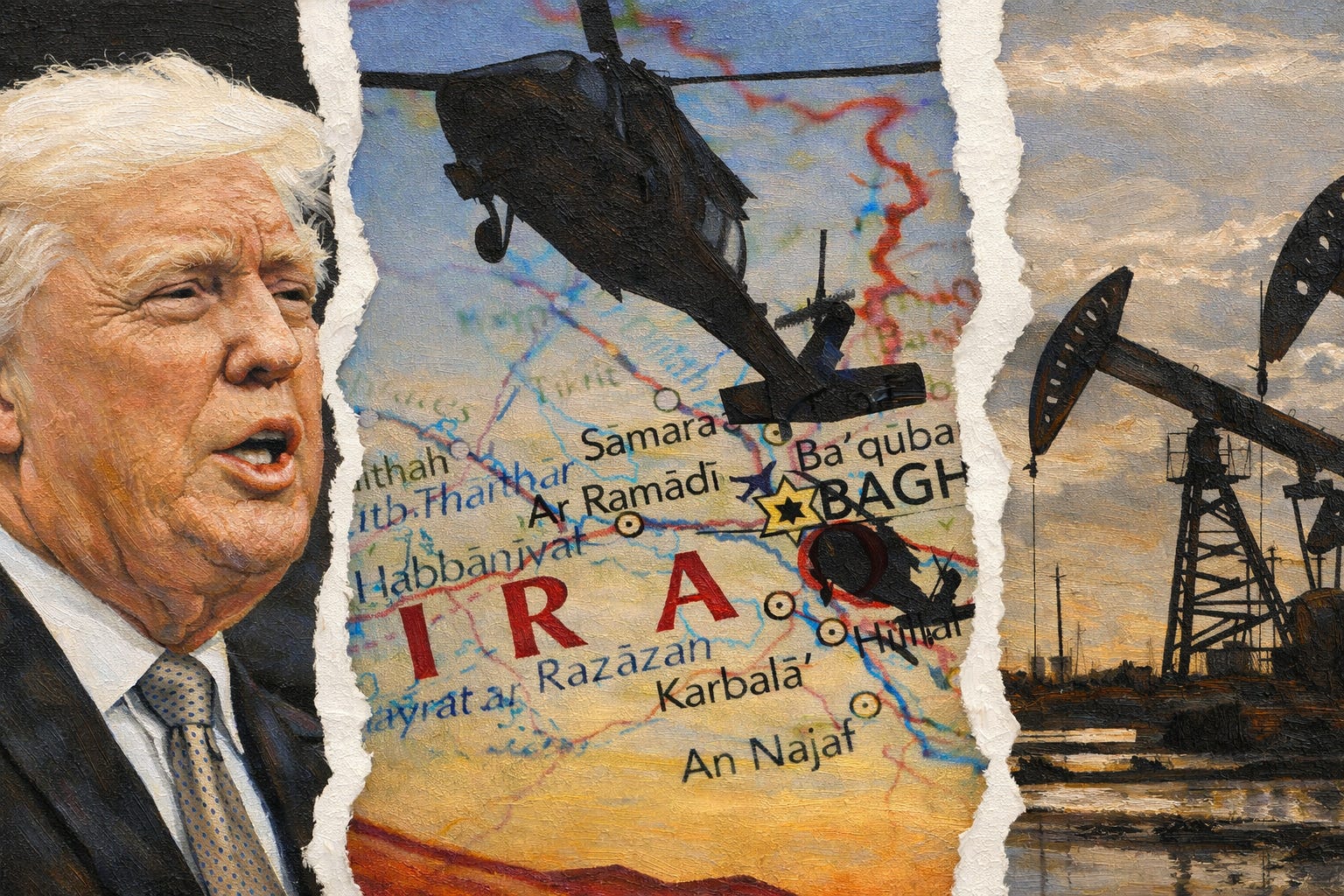
Oil past $100. A $26 billion credit fund gated. The Fed frozen between inflation it can’t tolerate and growth it can’t afford to kill. All in the same two weeks. The Iran war didn’t create these crises. It lit the fuse on three that were already wired together.
Trump posted a video of bombs hitting Kharg Island, Iran’s main oil terminal, like footage of explosions was a substitute for a plan. The IRGC responded by declaring the Strait of Hormuz closed. And the Fed can’t fix any of it.
Before February 28, when US-Israeli strikes killed Khamenei and set off everything that followed, oil was at $71. Now it’s up nearly 70%. Saudi Arabia is rerouting crude through its East-West pipeline to the Red Sea. The UAE is pushing barrels through Fujairah. Neither comes close to covering the gap. Kuwait declared force majeure and shut down production. Qatar warned others might follow.
Meanwhile, Iran has shipped millions of barrels to China since the war started. Paid in yuan. Turkish and Indian ships got through too. The Strait is not closed to everyone. It is closed to the West.
The Pentagon floated the idea of escorted convoys, but Energy Secretary Christopher Wright admitted those might not start before the end of the month. Hegseth called the blockade sheer desperation, which is a bold thing to say when five ships a day are getting through a waterway that used to handle 138.
Now zoom out.
BlackRock gated withdrawals from its $26 billion private credit fund on March 6. Clients wanted out. The firm said no, capping redemptions after demand blew past the threshold. A week before that, they’d written a loan to some Amazon aggregator called Infinite Commerce down to zero in a single quarter. From par to nothing. Fortune ran the headline: the $265 billion private credit meltdown. BlackRock, Blackstone, KKR, Apollo, Ares, Blue Owl, all of them are now watching retail investors, the exact people they spent years pulling into these funds, run for the exits.
The trigger? AI exposure. These funds are loaded with loans to software companies that large language models are threatening to make obsolete. An NBER study from February found that 90% of firms reported no productivity impact from AI, even as executives kept projecting gains. The gap between hype and reality isn’t a correction. It’s the start of something much uglier.
And then there’s the macro.
Growth came in at 0.7% last quarter. Inflation is still sticky above 3%. That combination has a name, and it’s stagflation, and it has the Fed completely frozen. Cut rates and oil-fueled inflation gets worse. Hold steady and a barely-breathing economy slides into contraction. Goldman already pushed its next rate cut forecast to September. Some FOMC members are quietly floating hikes. Powell’s term ends in May. His likely replacement, Kevin Warsh, inherits an institution with no good moves left.

The politics are brutal. CNN had 60% disapproval of the war on March 2. Fox had 61% disapproving of Trump’s economic handling two days later. Republicans wanted an economic message for the midterms. Instead they’re fielding questions about gas prices from voters who were promised relief. Trump went to Ohio and Kentucky to sell the idea that things were fine before and will be fine after, but that argument requires the war to end. Nobody in the administration has said how.
They initially promised a short conflict focused on Iran’s nuclear program. The goalposts have since moved to regime change and freedom of navigation, objectives that take years, not weeks. Iran planned for exactly this. Drones and terrain have made a ground invasion essentially impossible. Air power alone has never toppled a regime. Not once.

Iran’s new Supreme Leader, Mojtaba Khamenei, pledged to keep the blockade going indefinitely. Strategic petroleum reserves are being drained at historic rates, and every analyst agrees that’s a temporary fix that solves nothing if the conflict drags on.
Three crises feeding each other. Oil strangling the real economy. Private credit unraveling underneath it. A central bank stuck between inflation it can’t tolerate and growth it can’t afford to kill. Someone asked online whether there’s a way out. Fifteen days in, the better question is whether anyone in Washington has even started looking for one.