
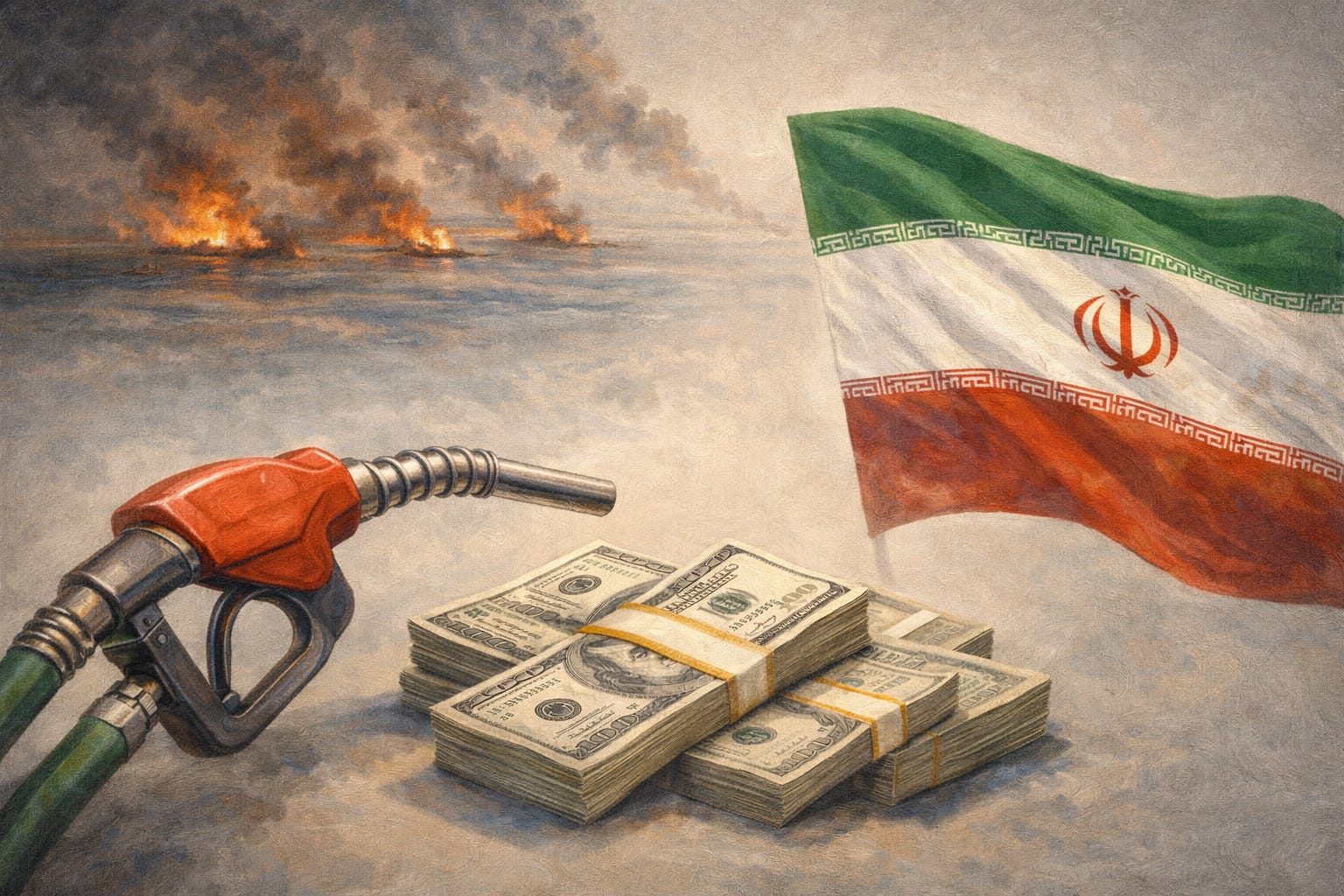
A little glitch. That is what Trump called it.
Ten days into a war with Iran, with gas prices jumping 50 cents in a week and Brent crude surging more than 30 percent above pre-war levels, Donald Trump went on television and called the economic fallout a detour. A bump. Temporary pain on the road to safety.
The Strait of Hormuz, which funnels roughly a fifth of the world’s seaborne energy supply on any given day, is now functionally closed. Iran’s IRGC announced on March 11 that not one litre of oil would be permitted through, and that ships linked to the US, Israel, or their allies would be treated as legitimate targets. Three vessels were hit by projectiles that same afternoon.
Shipping traffic through Hormuz had already collapsed after the February 28 strikes that killed Supreme Leader Ali Khamenei. Now it is essentially zero.
The International Energy Agency scrambled to release emergency reserves. Trump ordered a massive drawdown from the Strategic Petroleum Reserve. These are not the moves of governments managing a minor inconvenience. These are the moves of governments quietly panicking, buying days and calling them strategy.
The economic data arriving this week could not have been timed worse. February’s jobs report showed the economy losing 92,000 positions, the first contraction since the post-pandemic stumble. The inflation numbers published the same day the IRGC was hitting cargo ships were already obsolete before anyone finished reading them. Economists now expect the March CPI to deliver one of the sharpest single-month spikes in years.
Rising prices. Shrinking employment. The word nobody in Washington will say on the record is stagflation.
Ed Yardeni raised the odds of a market meltdown with 1970s-style stagflation to 35 percent, up from 20 before the war started. Recession probability on prediction markets cleared 40 percent over the weekend. The Federal Reserve meets March 18 with no good options: cut rates and risk feeding an energy-driven price spiral, or hold and watch an already fragile labour market deteriorate. There is no clever middle path here.
Trump’s political problem is more immediate. During the State of the Union in February, he boasted that gas was running below $2.30 in most states. Two weeks later, the national average hit $3.47 and was still climbing. Voters in Florida told Fortune this week exactly what they thought. He said he was going to bring gas down, one said, but the war in Iran is now making everything worse. Another: He said he was going to try to get out of wars, but he put us in it. These are not protesters. These are the people who voted for him.
One more detail worth sitting with. The IRGC, which announced it was sealing the strait to all traffic, is actively shipping Iranian petroleum to China through that same strait. The blockade has exceptions. Beijing gets access; everyone else gets a press release about geopolitical necessity.
Trump posted on Truth Social that short term oil prices, which will drop rapidly when the destruction of the Iran nuclear threat is over, is a very small price to pay for USA, and World, Safety and Peace. The capitalization is his. The confidence about a short, clean war is doing an enormous amount of work for an administration that has no stated timeline, no exit criteria, and no definition of what over actually means when the supreme leader is already dead and the IRGC is still firing on ships.
Two weeks ago, the biggest argument in Washington was whether tariffs were nudging consumer prices by a few tenths of a percent. That debate now feels like a different century.