
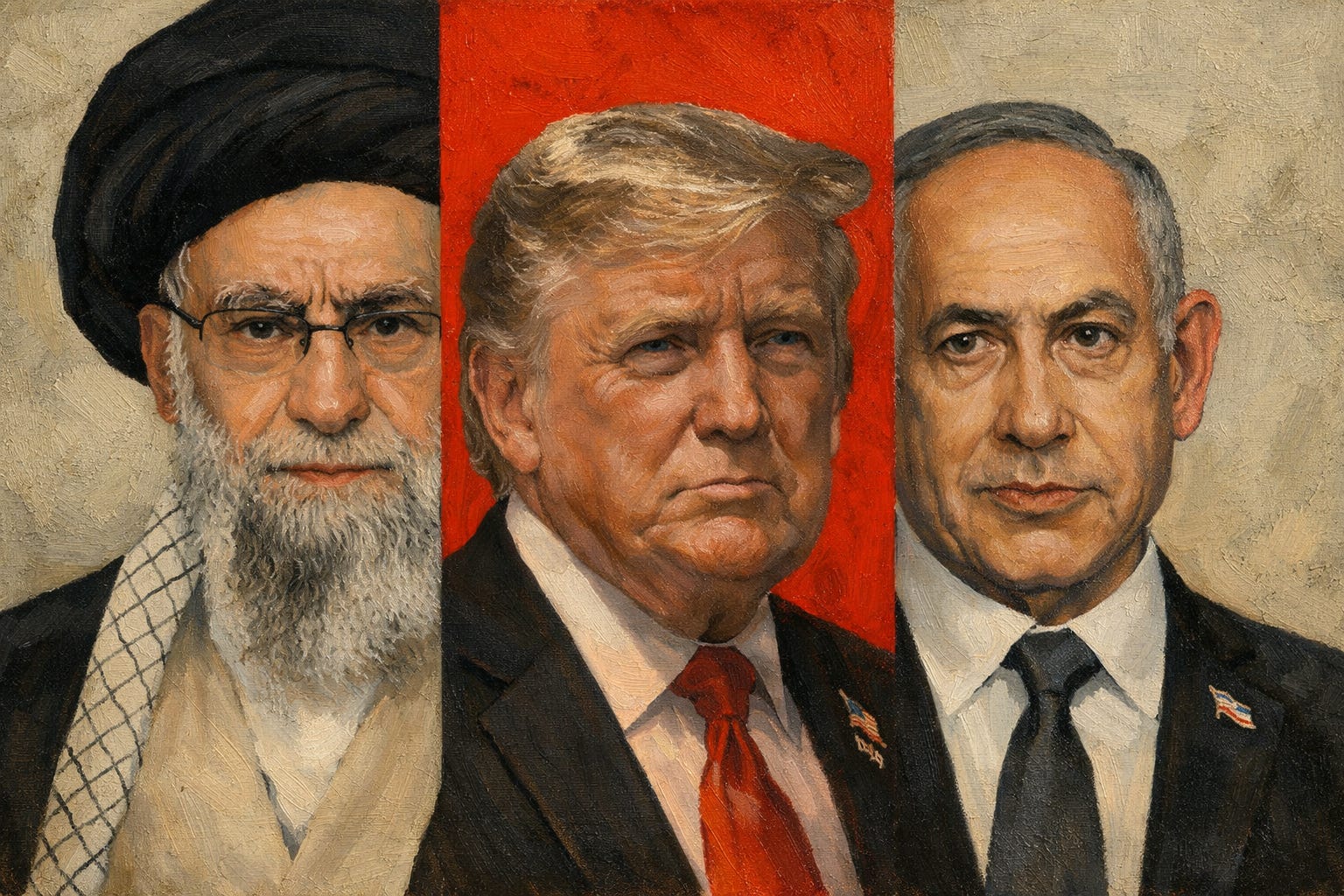
Semafor reported that Israel warned Washington it’s running critically low on missile interceptors. Sixteen days into a joint war with Iran. Billions in American Patriot missiles already spent. The IDF denied it within hours. There is currently no problem with interceptors. We prepared for a lengthy war.
Both things can be true. And the gap between them is where the real story lives.
Netanyahu hasn’t been seen in public for over a week. His last confirmed live appearance was around March 7. Then, on March 13, a video popped up that analysts flagged as AI-generated. Six fingers on one hand. His office called it fake news and said the PM is fine. He then skipped a wartime military council meeting. During an active shooting war. With hundreds of ballistic missiles landing on Israeli cities.
So: a country burning through its defences at an unsustainable rate, and a head of state who can’t or won’t show his face. The obvious read is that Israel is in trouble, stretched thin, totally dependent on Washington. That’s true enough. But it misses what’s underneath.
The Washington Post reported on February 28 that Trump’s decision to strike Iran came after weeks of lobbying from Israel and Saudi Arabia. He didn’t enter this war because America was attacked. He entered because once Israel moved, there was no way out. And weeks before the first missiles flew, the Pentagon’s 2026 National Defense Strategy had already framed Israel as a model ally, a country that fights its own wars and therefore deserves full backing.
Think about what model ally actually means. Israel initiates. America completes. Last June, when Israeli strikes on Iranian nuclear sites fell short, American bombers finished it. When interceptor stocks ran low, American THAAD batteries picked up the slack, chewing through roughly a quarter of the entire U.S. THAAD inventory in twelve days. Now it’s happening again, bigger. Karoline Leavitt told reporters American stockpiles are more than enough to achieve Trump’s goals and beyond.
And beyond. That phrase is doing a lot of heavy lifting and nobody’s asking what it means.
War on the Rocks called it entrapment. The alliance hierarchy, inverted. Israel’s defence minister said this week that operations continue without any time limit, as long as required. Trump told reporters the end would be a mutual decision with Netanyahu. A man nobody’s seen in a week.
There’s a thesis gaining traction in European policy circles and across certain corners of the internet, and it flips the whole thing. It says Israel isn’t the tail wagging the American dog. It’s the instrument. The vehicle through which a much older American strategic vision is being carried out, one that predates this administration, this war, and this century entirely.
In 1987, a real estate developer dropped nearly $95,000 on full-page ads in The New York Times, The Washington Post, and The Boston Globe. His argument: America was being bled dry by allies too cheap to defend themselves. His name was Donald Trump. His logic hasn’t changed in forty years. What changed is that he now runs the machine.
The 2026 defence strategy says it plainly. Europe is no longer the priority. NATO allies are already sketching plans for what comes after American withdrawal. Thomas Massie introduced a bill to leave NATO, calling it a Cold War relic. Musk, now a senior advisor, has called for leaving both NATO and the UN.
The dollar’s share of global reserves just hit its lowest since 1994. The Saudis are openly flirting with non-dollar oil settlements. China and Russia already bypass it entirely. The petrodollar isn’t dead, but it’s visibly aging, and the country it props up is simultaneously picking a fight with the one adversary that can choke global oil supply through the Strait of Hormuz.
Pull back far enough and it starts to cohere. An America walking away from Europe, dismantling the post-1945 order it built, letting dollar dominance erode, and channelling what’s left of its military energy into a Middle Eastern war fought through a partner whose ammunition it controls.
Whether this traces back to a newspaper ad in 1987 or is just what happens when one man’s instincts collide with structural decline might not matter. Netanyahu, wherever he is, isn’t calling the shots. He’s operating inside someone else’s frame. And the interceptors running dry aren’t just a logistics headache. They’re a live measurement of how much sovereignty you actually have when your ammo arrives on someone else’s schedule.
Trump said the war ends soon. Katz said no time limit. Somewhere in between, a country is finding out what model ally really means.
Ok... but what is the point of it?