
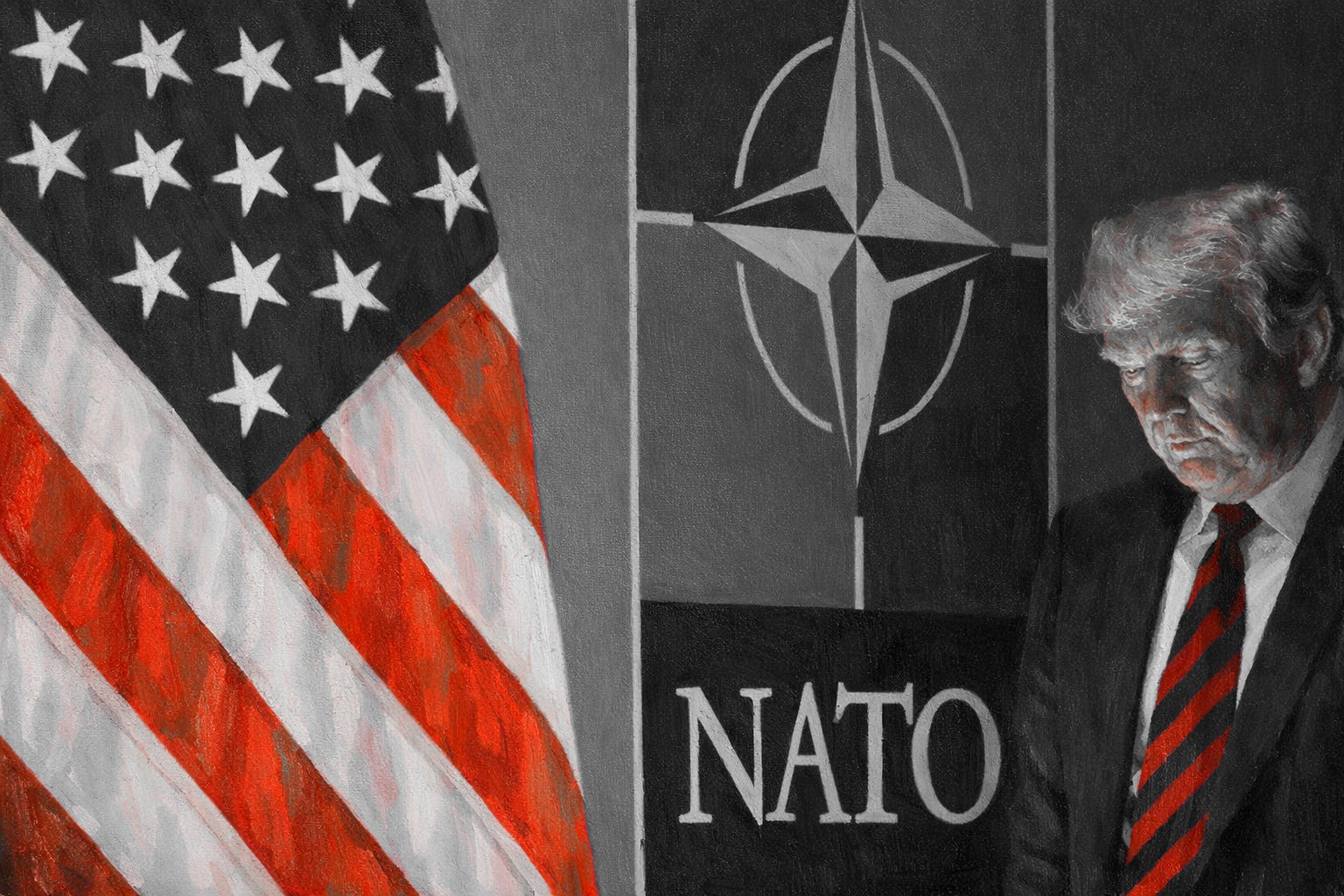
The global oil supply took a hit on February 28th and hasn’t recovered. Brent crude blew past $126. Fertilizer markets panicked. Those numbers tell a sharper story about NATO falling apart than anything Trump has screamed into his phone.
Trump wants Europe to help police the Strait of Hormuz. Europe said no. Spain shut its bases. Italy blocked American bombers from Sicily. Britain technically allowed basing rights, then wrapped them in so many conditions it barely counts. France sent a carrier to defend Cyprus but wouldn’t let American planes fly over its territory. Trump, predictably, lost it. COWARDS, and we will REMEMBER! he posted on March 20th. Rubio, once the Senate’s most reliable NATO defender, called the alliance a one-way street and promised a reckoning.
Suez cracked the alliance in 1956. Vietnam strained it. Iraq nearly killed it. Non-European wars have always done this to a treaty built for the North Atlantic. But something about this one feels terminal.

In 2023, Senator Rubio co-sponsored legislation with Tim Kaine requiring a two-thirds Senate vote before any president could pull out of NATO. It passed 87 to 13. Got folded into the defense authorization act. Secretary of State Rubio now talks about that law like it was written by a stranger, someone naive, someone who hadn’t yet done the math on defending allies who won’t pick up the phone. Between the senator who built the guardrail and the secretary trying to rip it out, there’s no intellectual journey. There’s just the gravity of a president who treats loyalty like a commodity with a spot price, repriced daily.
The real split, underneath all the noise, isn’t hawks versus doves. It’s between countries that spent the last decade preparing for America to leave and countries that assumed it never would. Poland bought weapons like Washington had one foot out the door. The Baltics did the same. Spain, Italy, Belgium kept writing checks based on the old assumption. Both bets are being called at the same time now, and only one side has the inventory to cover.
Pedro Sanchez calls the Iran campaign unjustifiable. That’s a moral position. It does not produce destroyer escorts.
Britain convened a call with about 40 countries on April 2nd to talk about reopening the strait. America wasn’t on the line. France wants to lead any escort mission, cut America out, bring in India, maybe China. Britain thinks that without American firepower up front, Iran will keep threatening ships. Trump says Europeans should take the lead, and America will be helpful, a phrase so hollow it could describe bringing napkins to a barbecue. Macron, in Seoul, called a forcible reopening unrealistic without a ceasefire first. Military planners from some unspecified group of countries are supposed to meet next week to discuss options that don’t exist yet for a mission nobody’s agreed to pay for.

Here’s the part that should genuinely alarm people. Iran has started floating the idea of a toll on ships passing through the strait. Not a blockade. A fee. If Tehran can monetize the chokepoint instead of just closing it, the whole thing transforms from a wartime tactic into a permanent shakedown, one that survives any ceasefire. Nobody on that 40-country call seems to have a plan for that.
Kurt Volker, former ambassador to NATO, calls European defiance foolish. And on paper, sure. Denying basing rights to the superpower that underwrites your security is incoherent. But the paper leaves out a variable: voters. Electorates in Madrid, Rome, and London didn’t sign up for a war in Iran and won’t tolerate their governments helping run one. Starmer’s line, this is not our war, isn’t courage. It’s a survival calculation from a PM whose majority depends on people who think the whole campaign is illegitimate. Trump fired back that Starmer is no Winston Churchill. He’s right about that, though probably not in the way he intended.
Mark Rutte lands in Washington on April 8th. The NATO secretary-general, the man who once called Trump daddy in a moment of diplomatic self-abasement that still makes the rounds in European foreign ministries like a low-grade embarrassment, will sit across from a president who claimed on April 1st the war could wrap up within weeks. Three months after that meeting, NATO leaders are supposed to gather in Ankara on July 7th. If the weeks between produce no escort mission, no ceasefire, no reopened strait, and no shift in Trump’s contempt, the Ankara summit becomes either a funeral or a founding. July 7th settles which.
References:
Time: Trump Threatens to Pull U.S. Out of NATO
Economist: European allies are losing hope of keeping America in NATO