
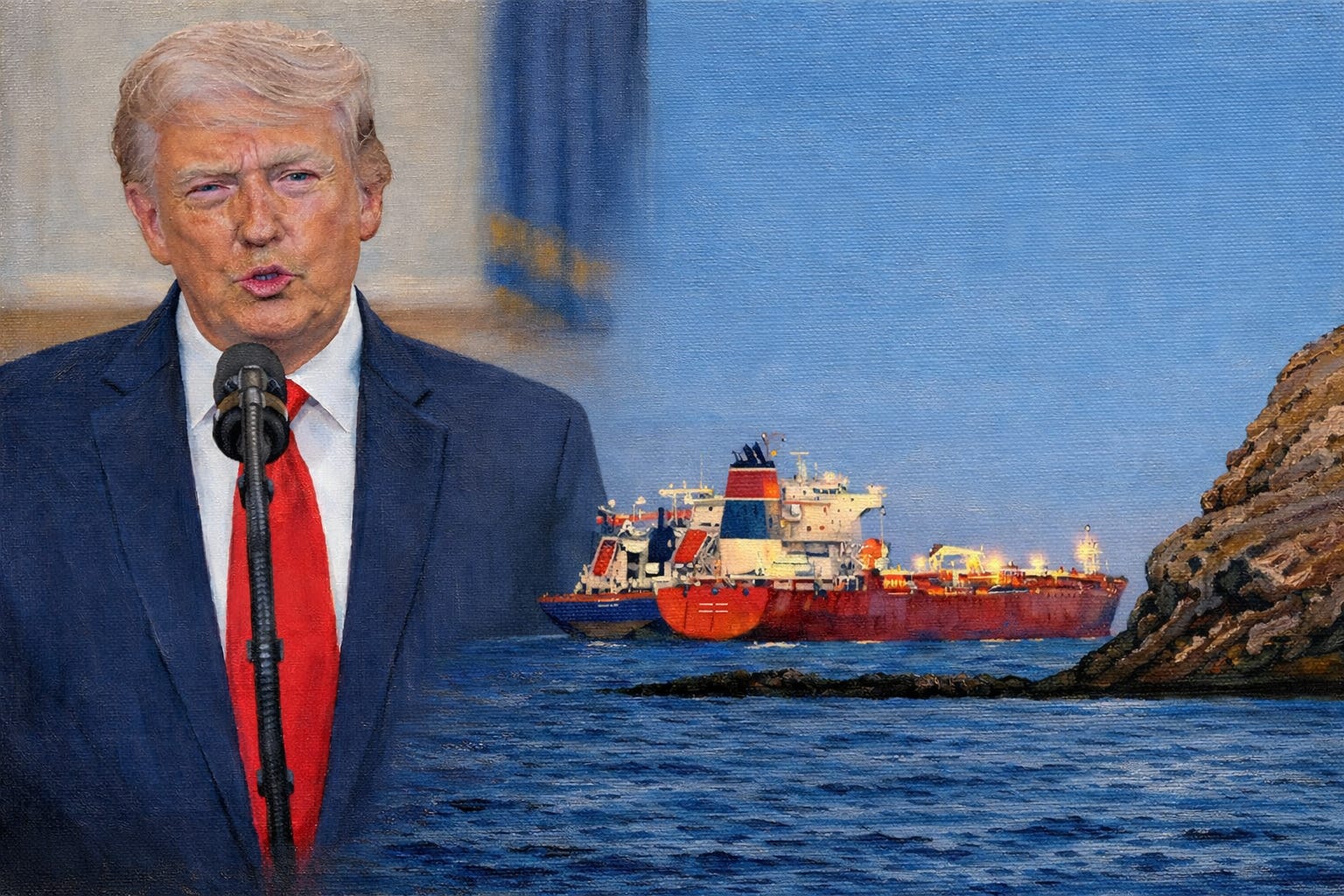
France, Russia, and China blocked military action on the strait. Trump can’t pick a position. And the world’s most important chokepoint is still shut.
On April 1, Donald Trump posted that the United States could easily OPEN THE HORMUZ STRAIT, TAKE THE OIL, & MAKE A FORTUNE. Two days earlier, his own White House said reopening the strait wasn’t vital to ending the Iran war. Then on April 2, he told the countries that actually need the strait to build up some delayed courage, go to the Strait, and just TAKE IT.
Three positions. Four days. Nobody blinked.
Bahrain spent weeks trying to push a Security Council resolution through. Four drafts. The original language authorized all necessary means to reopen Hormuz. By the fourth version that got sanded down to defensive means necessary and commensurate with the circumstances. Even that was too much. France, Russia, and China killed it on Thursday by breaking a silence procedure designed to skip the debate entirely.
The vote slipped to Saturday. A UN holiday got in the way. You can’t make this up.
Tehran sealed the strait on February 28. Since then, a handful of tankers have been allowed through at Iran’s discretion. Not freedom of navigation. A toll booth. And Iran has made clear it intends to keep running it even after the shooting stops.
The global response to all this has been, to put it generously, a group project where nobody read the assignment.
The UAE told the Wall Street Journal it was ready to help the US force the strait open. Hours later, officials walked it back, calling the report misleading and insisting Abu Dhabi was in a defensive posture. This after one UAE official had already floated the idea of occupying Iranian-held islands in the strait. Defensive posture is doing a lot of heavy lifting in Abu Dhabi right now.
Macron, from Seoul, called any military reopening unrealistic. Iranian ballistic missiles, indefinite timeline, too many risks. Then he turned around and accused Trump of contradicting himself on the war, which, fair. Paris wants to talk to Tehran. Build a coalition around diplomacy. The same Tehran that three other Security Council members want authorization to shoot at.
Ukraine showed up too. Foreign Minister Sybiha joined a 40-country call and pitched Kyiv’s naval drone expertise, the stuff that broke Russia’s Black Sea blockade. A country fighting for its own survival auditioned for a second maritime crisis on a different continent. That’s either admirably scrappy or deeply bleak, depending on the angle.
Britain, meanwhile, started assembling a coalition of 35 nations to restore shipping through Hormuz after hostilities end. Not during. After. Planning the cleanup while the house is still on fire.
So here’s where things stand. The Security Council can’t agree on a single word. The president who kicked off this war swings between saying the strait doesn’t matter and threatening to seize it. France says force won’t work. The UAE says it supports force, but only with partners, under international law, through mechanisms those partners can’t agree on. Ukraine offers drones. Britain plans for later.
And the country that imports more oil through Hormuz than anyone else on earth, China, just voted against reopening it. Beijing’s logic isn’t mysterious. Any resolution authorizing force near Iran creates a precedent that could boomerang to waterways much closer to Chinese interests. Russia has its own reasons for keeping Tehran happy. France just did the math on Iranian missile stocks and didn’t like the answer.
Every veto makes sense on its own. Together they make no sense at all.
Guterres warned this week that the region is nearing a breaking point. The Security Council heard that, then spent two days arguing about whether defensive is an acceptable synonym for all necessary.
Bahrain’s watered-down resolution probably comes to a vote Saturday. If it passes, it authorizes something muscular enough to deploy ships and vague enough to prevent them from doing anything useful. If it fails, Hormuz stays shut, oil keeps climbing toward numbers that Wall Street is already quietly modeling, and fertilizer shortages start turning into food crises by summer.
Who, exactly, is the Security Council protecting here? And from what?