
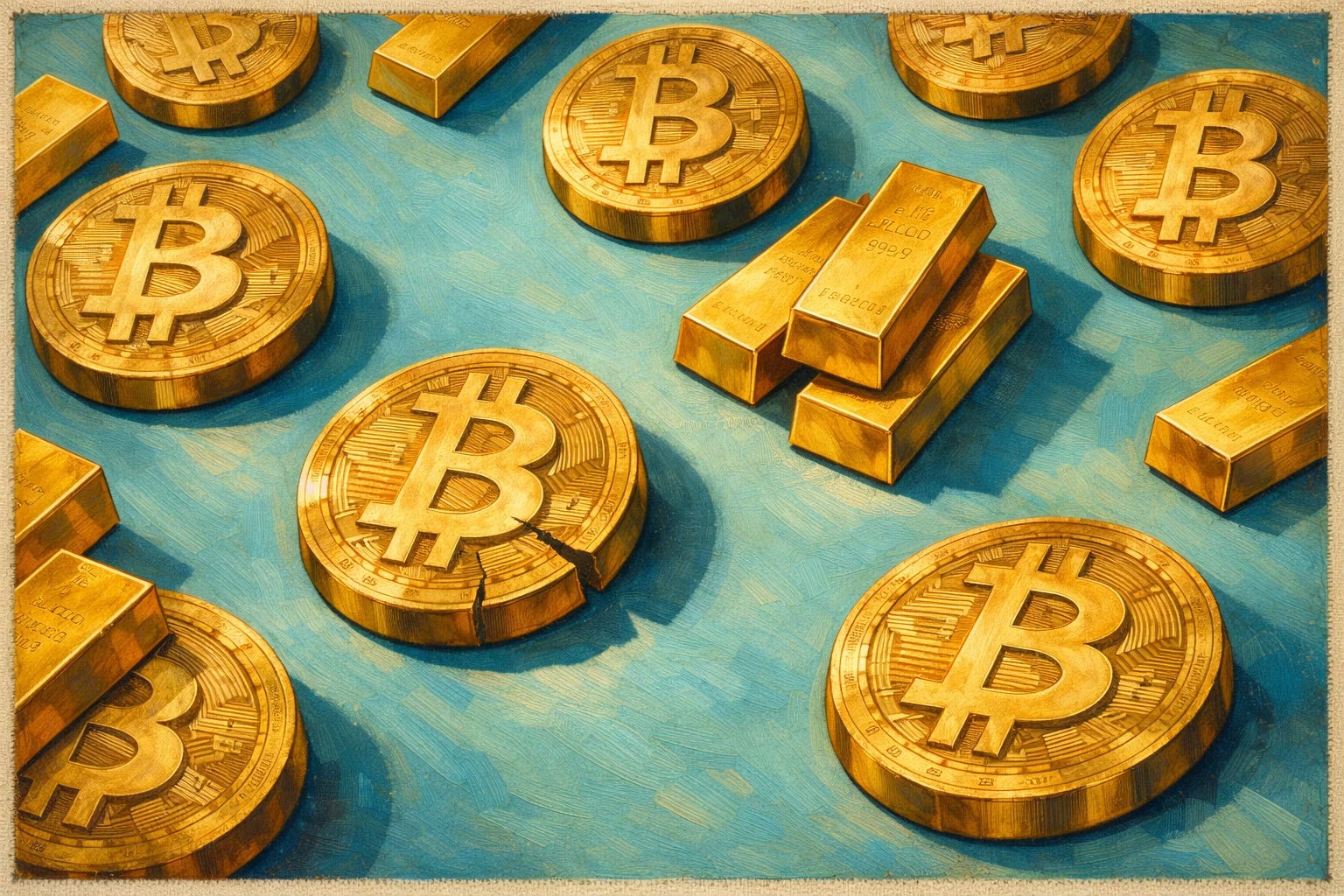
Gold surged 60 percent in 2025. Bitcoin fell 6 percent. That single comparison demolishes a decade of breathless promises about digital gold.
The year was supposed to be perfect for crypto. Ballooning debt, trade wars, geopolitical chaos, a second Trump administration stacked with industry allies. Every condition the maximalists had been waiting for.
And physical gold did exactly what they said Bitcoin would do. Soaring past $4,200 an ounce as central banks hoarded metal and investors fled to safety.
Meanwhile, the supposedly censorship resistant store of value behaved like speculative garbage, plunging whenever real fear entered the market. The correlation between Bitcoin and gold went deeply negative. These assets do not move together.
One is money. The other is a casino chip with good marketing.
The legislative response to this obvious failure has been to double down. Treasury Secretary Scott Bessent, a former Soros protégé turned crypto enthusiast, heralded the GENIUS Act as a seminal moment for dollar supremacy. The law creates a federal framework for payment stablecoins. Issuers can now be chartered as national trust banks.
On paper, almost reasonable.
Stablecoin issuers have no guaranteed access to the Fed’s discount window. In a liquidity crisis, nothing stops a run. The Act creates narrow banks but fails to insulate them from broader contagion. Detractors call it the Reckless Idiot Act. Seems fair.
The companion CLARITY Act completes the dismantling. Defining most digital assets as commodities rather than securities, it shifts oversight to the CFTC. A regulator with fewer resources and a lighter touch. Issuers can self certify that their blockchain is mature and decentralized, exempting tokens from registration.
Fraud protection was never the point.
The real battle is over deposits. At Davos, Jamie Dimon reportedly confronted Coinbase CEO Brian Armstrong, accusing him of spreading falsehoods. The dispute centers on whether stablecoin issuers should pay interest on balances. Armstrong wants the yield to compete with banks.
If they take deposits and pay interest, they are banks. Letting them bypass capital requirements while siphoning deposits is regulatory arbitrage, not innovation.
None of this stopped the administration from rewarding donors. Trump pardoned Changpeng Zhao, founder of Binance, who had pleaded guilty to facilitating transactions for Al Qaeda and ISIS. The pardon followed reports of CZ’s financial support for World Liberty Financial, the Trump family’s own crypto venture.

Financial loyalty now supersedes the law.
The speculative mania produced inevitable casualties. The $TRUMP and $MELANIA tokens launched days before the inauguration. Within hours, market caps hit billions. By late 2025, both had collapsed 95 percent. Insiders controlled the supply, extracting wealth from retail investors before the crash.

El Salvador provides the living autopsy. Four years after adopting Bitcoin as legal tender, fewer than 5 percent of transactions use it. The population rejected daily use, preferring the dollar. The IMF found no evidence that Bitcoin promoted financial inclusion.
None.
As a store of value, crypto failed while gold soared. As a currency, adoption remains negligible even where mandated. As a financial system, it requires dismantling safety nets to function.
Bessent predicts stablecoins could generate trillions in new Treasury demand. Issuers becoming forced buyers of government debt. This is the tell. The future of money will feature digitization, but it will be centralized fiat, not the libertarian fantasy.
The crypto grifters promised revolution. They delivered a pump and dump with better branding.
This is an excellent article! I really love your content. It's so important we educate ourselves and others about the crypto realm. Cause its an unfathomable shit show.
Gold up 60%, Bitcoin down 6% — that's the "store of value" narrative dead on arrival. But the failure goes deeper than the gold comparison. Bitcoin has now burned through every monetary claim it's ever made: currency (can't price goods with 20% daily swings), digital gold (actual gold won the debasement trade), and now political asset (patron cratering). Each failure traces back to the same structural impossibility: crypto can't simultaneously be "currency" and "investment." The speculation that drives returns is exactly what prevents it from functioning as money. Your stablecoin analysis nails the punchline — the only crypto that works as money does so by surrendering to the fiat system. I wrote about why this contradiction was always baked in: https://www.mecrankyoldguy.com/p/is-cryptocurrency-currency