
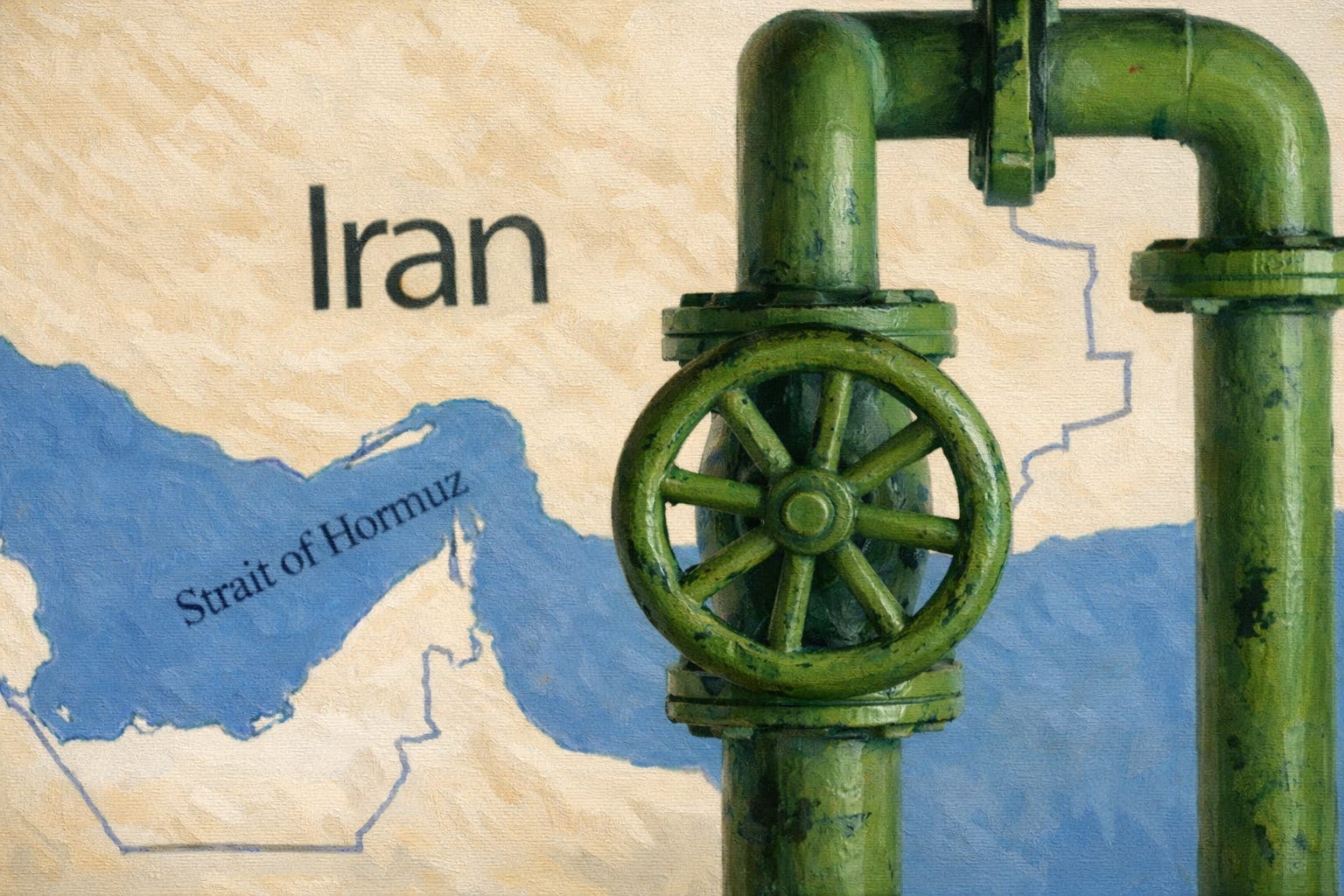
Sometime yesterday night, from his Florida estate, Trump posted on Truth Social what amounted to a countdown clock on a regional catastrophe. Open the Strait of Hormuz in 48 hours or the United States will hit and obliterate Iranian power plants, starting with the biggest. Tehran responded within hours. Iran’s military command said if its energy infrastructure gets hit, every energy facility, IT system, and desalination plant belonging to the US and its allies in the region becomes a target.
Four weeks into the war and the Strait of Hormuz is functionally dead. Trump called the economic fallout a little glitch ten days in, when gas had only jumped 50 cents and the Fed was still pretending March inflation data would be manageable. Two weeks later, the glitch has metastasized.

But what happened this weekend is different. The escalation just shifted from oil to water. From commodity markets to whether people can drink.
Kuwait gets 90 percent of its drinking water from desalination plants. Oman, 86. Saudi Arabia, 70. Qatar and Bahrain roughly the same. About 100 million people across the Gulf drink manufactured water, piped from coastal facilities sitting on exposed shorelines, within range of Iranian missiles and drones.
This is already happening. March 7, Iran accused the US of hitting a desalination plant on Qeshm Island, cutting water to 30 villages. Washington denied it. Next day, Bahrain said an Iranian drone damaged a facility near Muharraq. Kuwait and the UAE have both acknowledged indirect hits on their own plants.
Tehran formalizing desalination as a retaliatory target is not a new category of warfare. Both sides already crossed that line.
The real nightmare sits on Saudi Arabia’s eastern coast. Jubail. One desalination complex feeding Riyadh through a single 500-kilometre pipeline. A leaked US diplomatic cable from 2008 warned that serious damage to Jubail would force the evacuation of 8.5 million people within a week. Saudi Arabia has since built backup pipelines, storage tanks, emergency units. Whether any of that holds under sustained missile fire from a regime fighting for its survival is something nobody in Riyadh wants to find out. Especially when the military supposedly shielding the region burned through half its Arrow interceptor stockpile in four days and is now choosing which Iranian munitions to intercept and which to let through.

Gulf states saw this coming. Small mobile desalination units, diesel-powered, off-grid, deployed across Kuwait, Qatar, Saudi Arabia, and the UAE. Abu Dhabi pumped desalinated water into an underground aquifer, enough for maybe 90 days.
Sensible. Also wildly insufficient if Iran starts systematically hitting the big coastal plants.
Trump’s ultimatum forces a brutal calculation on Tehran. The Hormuz blockade is Iran’s strongest card. The IRGC declared not one litre of oil passes through for enemy nations. Reopening it under an American deadline would be a surrender the regime cannot politically survive, not while bombs are still falling on Iranian soil. Refusing means Monday evening the clock runs out, American strikes begin on Iranian power infrastructure, and Iran has already pre-committed to answering by going after the systems that keep Gulf populations alive.
Washington calls the Hormuz closure economic warfare. Tehran points to Qeshm Island. Bahrain’s damaged plant proves Iran will act, not just talk. And the 100 million people whose water depends on coastal facilities they cannot protect have no seat at any table where this gets decided.
Bomb a power plant and generators pick up part of the slack. Bomb an oil terminal and revenues bleed but nobody dies by Thursday. Bomb a desalination complex in a country where it barely rains, where the aquifers are depleted or salt-poisoned, and the humanitarian crisis arrives in days.
The water crisis has no dollar figure because it has no market solution. No strategic reserve to tap. No alternative supplier to call.
None of the Gulf states asked for this war. None have fired a shot. Bahrain, Kuwait, the UAE, Saudi Arabia are absorbing the fallout of a US-Israeli campaign they did not start, while Washington and Tehran both treat their territory as acceptable collateral. The question of who is actually running this war, a country whose prime minister hasn’t been seen in public for two weeks or the administration drip-feeding its interceptors, matters very little to Gulf populations watching their taps.
Riyadh has said almost nothing publicly. Allied with Washington, dependent on a stability Iran can destroy, sitting on a water system built for peacetime.
What happens when the desalination plants go dark and 100 million people in the driest region on earth find out the real weapon was never oil.
References:
Well I had concerns about the American actions to begin with, the military capabilities of Iran are truly frightening.
I well I don’t support the American