
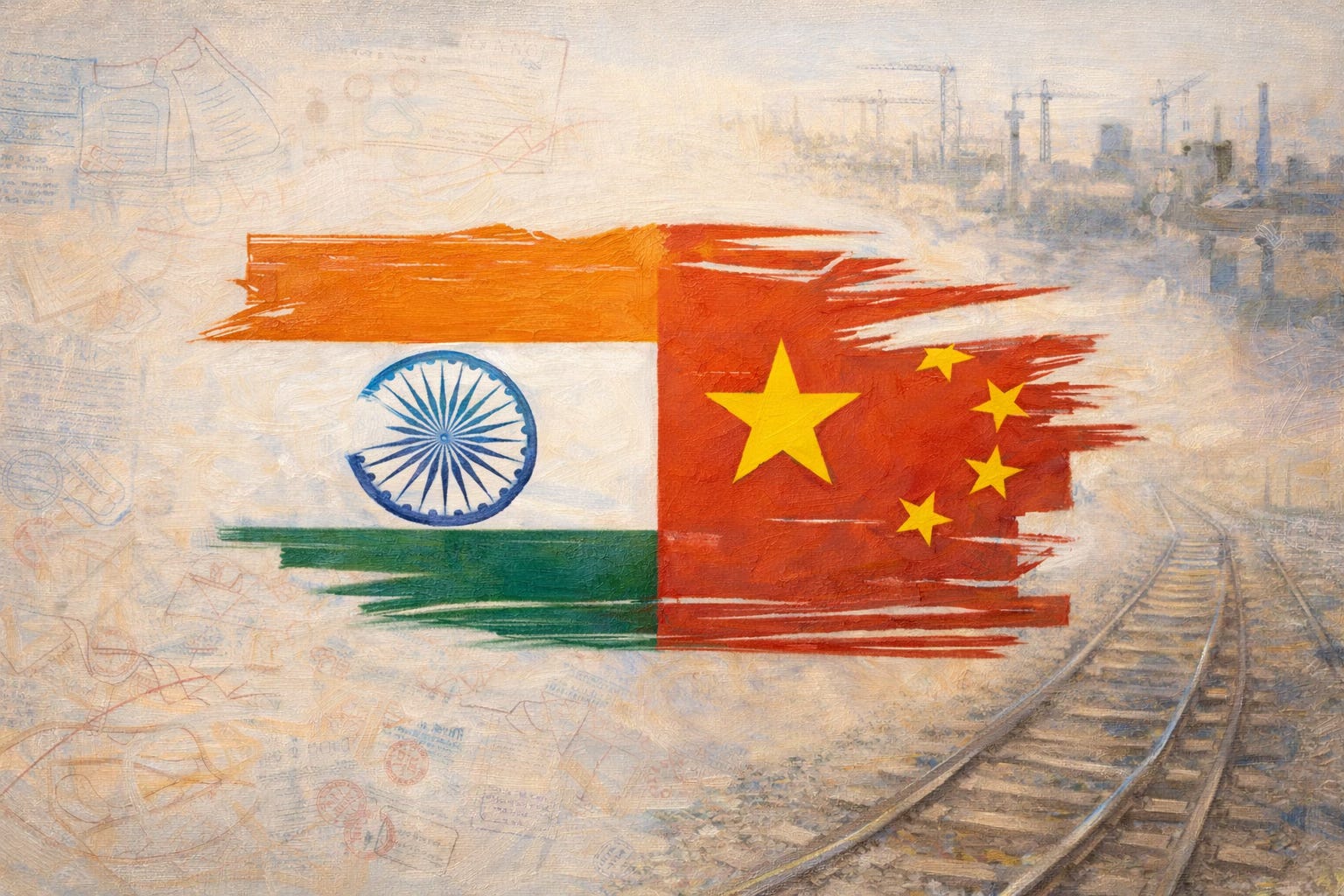
In 1978, a Chinese peasant and an Indian farmer were statistically indistinguishable. Same poverty. Same illiteracy. Same basket case status in development circles.
By 2024, the Chinese peasant’s grandchild works in a factory making iPhones.
The Indian farmer’s grandchild is more likely to still be farming. Or driving a rickshaw. Or sending desperate messages to relatives abroad.
China’s GDP per capita is nearly five times India’s. Anyone who tells you this is complicated is selling something.
The standard cope goes like this: authoritarianism is simply more efficient. Democracy is messy but virtuous.
Both claims are nonsense wrapped in ideology. Plenty of dictatorships are catastrophic failures. Plenty of democracies thrive.
The real story is grimmer.
China ran what economists call an M-form hierarchy. Provinces functioned as semi-autonomous economic laboratories. If Sichuan figured out how to attract foreign investment, Beijing noticed. Officials got promoted. If a policy flopped, the damage stayed local.
India ran the opposite.
Power fragmented vertically across ministries. Horizontally across states. Diagonally into caste and religious lobbies. Building a power plant required approvals from central Environment, state Land Revenue, central and state Power ministries, plus whatever local strongman controlled the village council.
So.
China built 40,000 kilometers of high speed rail in fifteen years.
India is still constructing its first bullet train line. Land acquisition in Maharashtra and Gujarat has stalled for over a decade.
The human capital story is worse.
When Deng opened China’s markets, the workforce was already literate and healthy. The Barefoot Doctors program was rudimentary, yes, but universal. Basic vaccinations. Primary care across rural China.
India, the ostensible socialist republic, poured resources into elite IITs and IIMs while the village school collapsed.
India’s literacy rate in 2011 was still lower than China’s in 1990.
Let that sit.
And then there is the issue everyone tiptoes around.
Women.
China mobilized female labor. The CCP, whatever its crimes, destroyed feudal patriarchy. Women entered factories by the millions.
India’s female labor force participation hovers around 25 percent. The Sanskritization effect means that as Indian families get richer, they pull women out of the workforce. A status marker.
India benches half its team and wonders why the scoreboard looks bad.
The sectoral composition tells the rest.
China followed the East Asian playbook. Surplus agricultural labor into labor intensive manufacturing. Productivity boom. Mass employment. Export dominance.
India leapfrogged directly to services.
IT and BPO created a wealthy urban class. Positioned India as the world’s back office. But services require English literacy and computer skills. The agrarian underclass never touched the primary engine of modernization.
The phrase jobless growth is not slander. It is accounting.
Land acquisition completed the trap. China owns its land. The state reclassifies, compensates, bulldozes, builds.
India’s 2013 Land Acquisition Act requires consent from most affected families and compensation at four times market rate. Socially just. Economically suicidal.
A highway that takes two years to build in China might take ten in India.
The optimists point to demographics.
China’s workforce is shrinking. The One Child Policy chickens coming home. India will add over a hundred million workers by 2050. The demographic dividend is real.
Except a dividend requires jobs.
China won the sprint by mobilizing everything and sacrificing it all for speed. Now the debt is coming due. Real estate represents a third of the economy and is collapsing. The political system cannot admit error. Zero COVID persisted until street protests forced an end.
India avoided these catastrophes by never moving fast enough to create them.
The question for the next quarter century is simple.
Can the tortoise learn to run before the hare dies of exhaustion? Or does India stumble into 2050 with the same literacy gaps, the same gender exclusions, the same infrastructure deficits?
Just with more people.
References:
1. Giving too much importance to religion and mixing it with politics such that development takes a backseat and someone advocating for temples is seen as a Messiah among Hindu voters and someone advocating for Muslims and mosques gets all the votes of Muslims. Speeches during election campaigning give barely importance to education, eradication of poverty, lowering taxes, controlling inflation or providing employment and the public at large isn't even bothered by it.
2. The lack of civic sense is a huge turn-off because of which they are looked down upon in other countries. They would throw plastic wrappers here and there, dump their garbage on the main road, throw things out of moving vehicles, take a leak on the walls and because of all this, the roads around us are so dirty.
3. Indians have a tendency to bask in reflected glory. They feel very proud to hear someone from their state or their country has brought laurels! While that is a very good thing, your personal achievement shouldn't be that someone from your country has achieved something great. Rather than that, work hard yourself and earn that. Even as a Bengali, I feel we are basking in the lost history when stalwarts like Swami Vivekananda, Rabindranath Tagore and Subhash Chandra Bose walked on the soil. It has been a century since then and even though we haven't produced any significant breakthroughs, we are still happy about what we did in the past.
4. Corruption is huge in India and because of this, the government officials don't really care about serving the country or uplifting the society. Their only motto is to fill their pockets. Sub-par roads and highways are killing thousands of people every year, sub-par infrastructure is causing train derailments every alternate day. Crores of rupees are being spent from the top but they rarely reach the public. Most of it gets lost in the middle when it passes from one hand to another.
5. India has become the diabetic capital of the world and that is because of our unhealthy food habits. We are consuming sugar and salt in huge amounts and the fast food outlets are minting money out of this. Half of the people don't even know what's good for them and what's not. They think drinking fruit juice from a Tetra pack is providing them with essential vitamins whereas in reality, they are taking sugar and nothing more. They believe consuming diet Coke is healthier but they don't know the harmful effects of artificial sweeteners. Food habits are something that Indians need to be educated about.