
A new BCG report, the same bankers, the same shrug. Mark the calendar for next year’s edition.
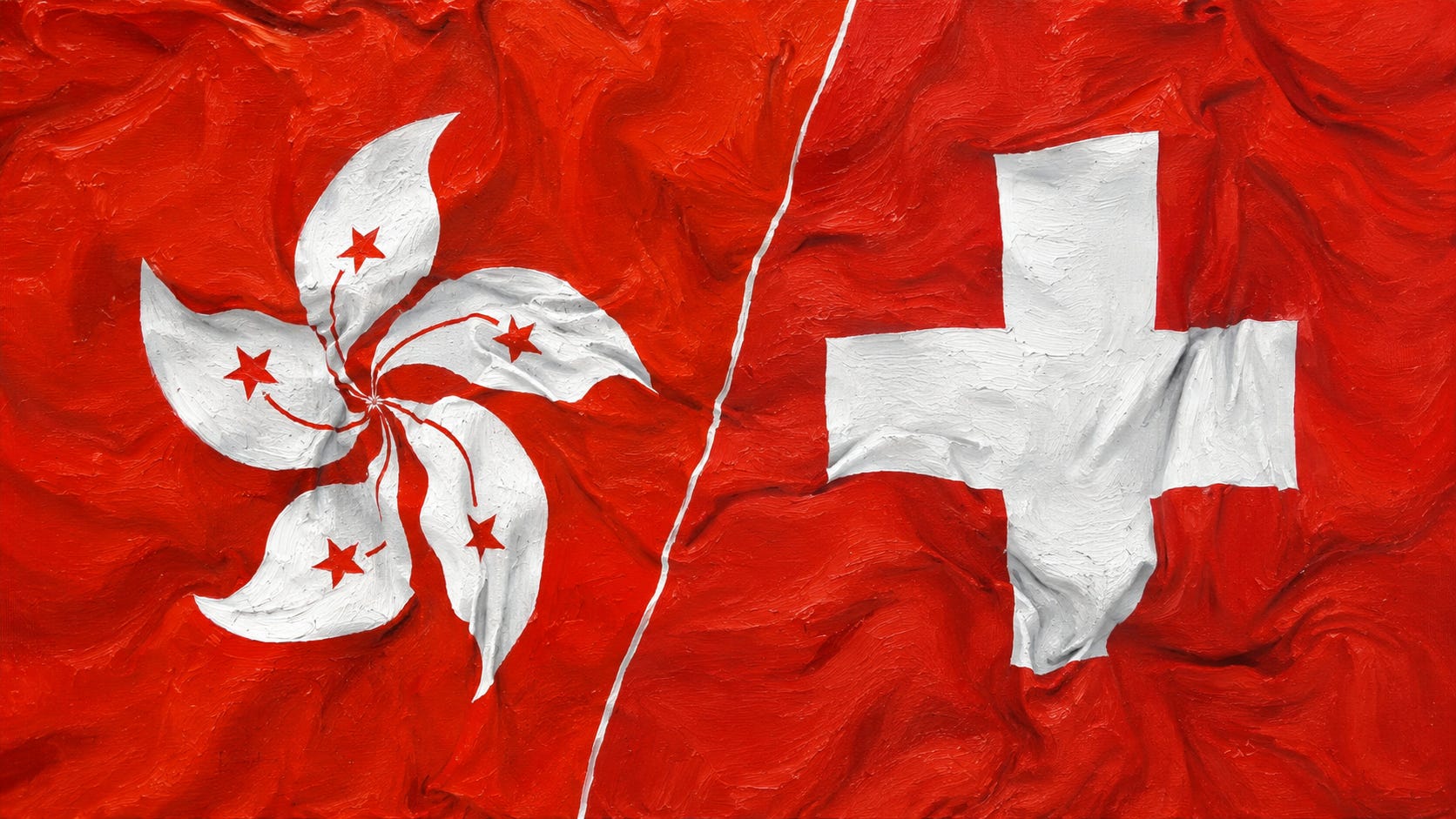
Hong Kong just overtook Switzerland as the world’s biggest cross-border wealth hub. According to Boston Consulting Group, wealth managers there booked $2.9 trillion in international assets last year. Roughly sixty percent of it came from mainland China.
That is, in plain English, an enormous pile of money walking quietly across a border to be looked after by someone discreet.
Switzerland used to do the looking. For a hundred years, give or take, that was the brand. Now the brand is moving east, and Swiss banks are losing market share to a city the Chinese Communist Party answers a phone call from. Whatever that says about modern finance, it is not flattering.
The press is reporting all this with a straight face, the way Variety covers box office. Two hubs emerging, BCG’s Michael Kahlich explains: Hong Kong and Singapore in one corner, Switzerland and the UAE and the United States in the other. The vocabulary is corporate and a little embarrassing: booking centres, cross-border flows, mature western European fortunes. The map is being redrawn, and the consultants very much want you to know they are doing the redrawing.
Notice who is doing the talking.
This is a completely new phenomenon. I haven’t seen anything like it.
Michael Pellman Rowland, the Swiss-based wealth manager whose rent depends on it being a completely new phenomenon.
The cast:
BCG: produces the report, sells it to the banks profiled in the report.
An anonymous UBS banker in Zurich: frets that Switzerland is just relying on its stability. Translation: the marketing budget should be larger.
Hong Kong: currently the city saying come in, the water’s lovely.
Geneva’s freeports: quiet rooms full of art nobody looks at.
You: paying tax from a payroll deduction you did not authorise.
The favourite new phrase is jurisdictional diversification. It sounds like a yoga posture. In practice, it is the construction of a personal foreign policy by people whose actual passports are far less portable than their assets.
A Chinese steel magnate worried about Beijing parks money in Singapore. A Russian energy heir worried about Brussels parks his in Dubai. A Saudi prince worried about his cousin parks his in Zurich, then re-books it through Hong Kong because his accountant has been to a conference. Everyone, in this telling, is a victim of geopolitics. Almost nobody is its author.
Meanwhile, the $2.9 trillion does what such money usually does, which is mostly nothing. Accrue. Hedge. Get lent against to buy art that ends up in a Geneva freeport.
Dubai is the next chapter, obviously. UBS, JPMorgan, Deutsche Bank: the entire brand-name procession has set up shop in the emirate. The official sales pitch, politely transcribed, is zero income tax, relative political stability and an influx of wealthy individuals. That last clause is doing the most. The wealthy individuals are arriving from Russia, India, China, Europe, the Gulf, which is an impressively complete list of large landmasses with people on them.
Singapore has slowed down. There were high-profile money laundering cases and a regulatory crackdown. This is the cycle in miniature. A booking centre grows, attracts a colourful clientele its politicians cannot defend on television, tightens its rules, loses share, watches the money walk to the next jurisdiction saying come in, the water’s lovely. Hong Kong is currently saying that. Hong Kong will not be saying it forever.
Back in Zurich, UBS is reportedly at loggerheads with regulators over new capital rules. UBS would prefer fewer rules. The Swiss government would prefer not to be on the hook for another bailout. Somewhere in between, a marketing team is rebranding the country as a boutique wealth hub for discerning families, which is what countries do when they are losing on volume.
Next year there will be another BCG report. The number will be larger. Someone will tell a reporter it is a completely new phenomenon. A different banker, in a different city, will worry his country isn’t doing enough. The map will be redrawn again, in the same colours. And the $2.9 trillion, minus what has moved, plus what has joined it, will go on being the most important thing in the world that almost no one you know has anything to do with.
Elsewhere this week:
The ongoing UBS vs. Swiss regulators fight over capital rules.
BCG’s Global Wealth Report, if league tables are your thing.
The Geneva Freeport, the building where the art waits.
P.S. The next BCG report drops, predictably, around this time next year. Mark the calendar, or don’t.
References:
Hong Kong overtakes Switzerland as hub for global offshore wealth
Hong Kong overtakes Switzerland as world’s largest cross-border wealth hub, BCG finds