
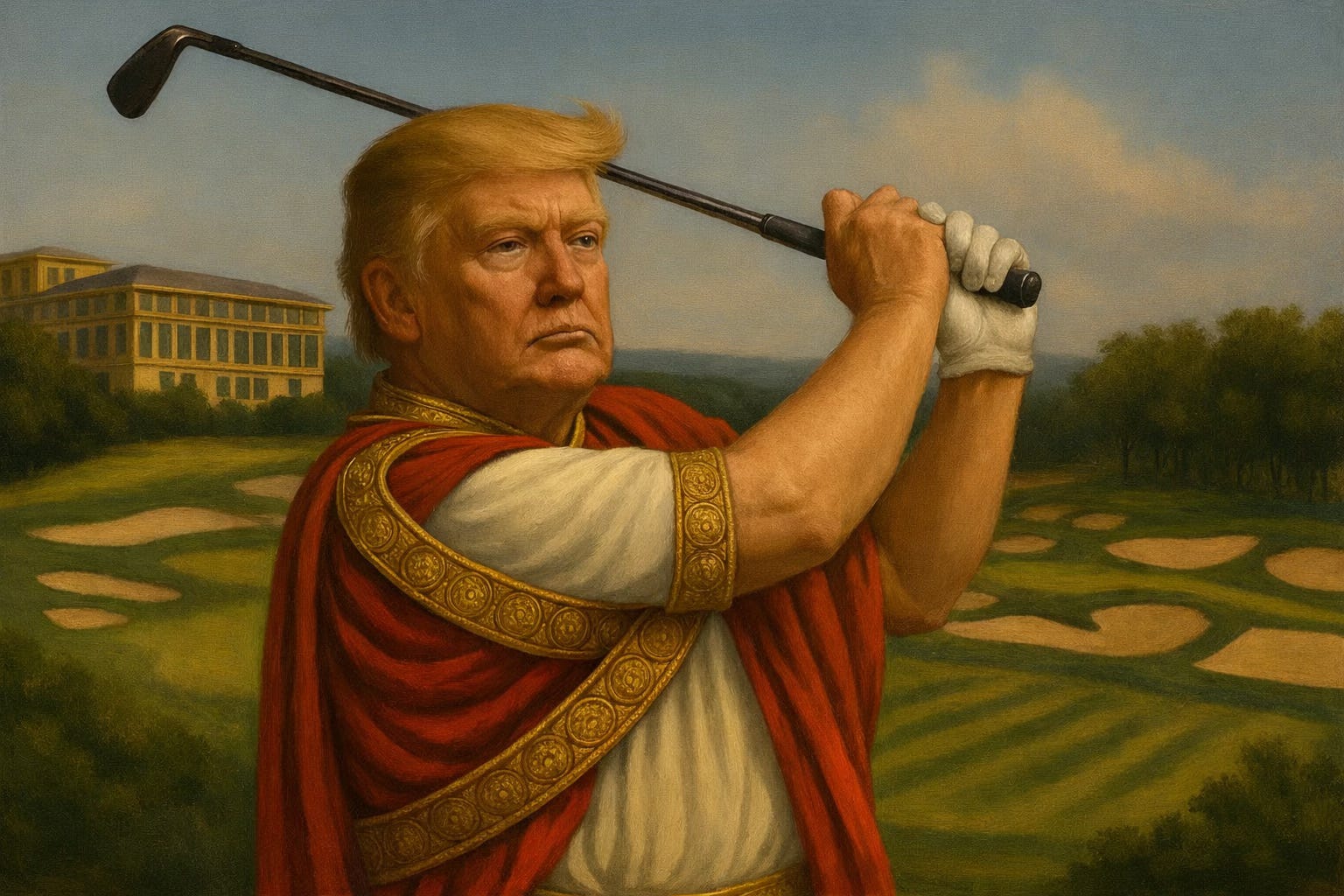
Taxpayer-funded golf isn’t a side scandal. It’s the business model.
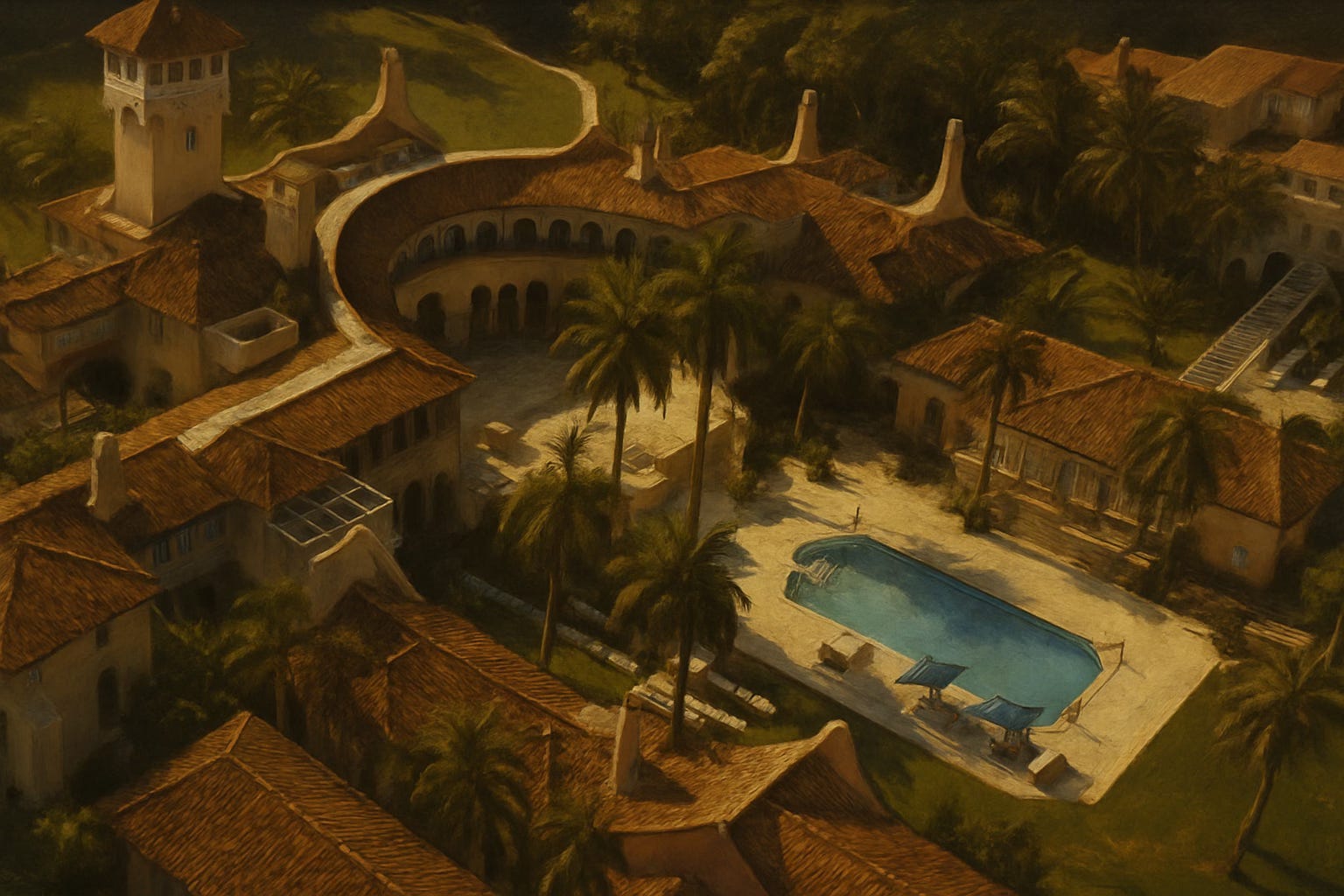
Picture a weekend at Mar-a-Lago. Twenty-vehicle motorcade rolling through Palm Beach. Marine One on the lawn. C-17 cargo planes delivering armored limousines. Secret Service agents with room keys and government credit cards. Coast Guard offshore. Local cops closing roads.
The president heads to the course. The Trump Organization bills the Treasury.
By late 2025, the second term has burned about $71 million in golf-related travel in under a year. Full-term projections land around $300 million. The first term’s $151.5 million almost starts to look restrained.
There is no neat budget line for any of this. Costs scatter across Defense, Homeland Security, State, the Coast Guard, and a haze of classified accounts that do not feel obliged to explain themselves. A 2017 review broke out four Mar-a-Lago trips: one standard presidential weekend at the club runs roughly $3.4 million. Air operations eat about $2.65 million of that. The rest goes to lodging, logistics, and the privilege of relocating the presidency into a private resort.
That’s just the visible part. It does not include overtime, surge staffing, or the sheer hassle of running executive power out of a commercial property where a six-figure membership buys breakfast inside the blast radius of classified conversations.
Sixteen Mar-a-Lago visits so far in the second term. That alone comes to roughly $54 million in Florida weekends. Add the international golf trips to Turnberry in Scotland and Doonbeg in Ireland, plus Bedminster summers in New Jersey, and the total hits $71 million in under a year. The money is not wandering. It is tracking the motorcade to Trump properties.
One 2025 Turnberry visit is estimated around $10 million. C-17 aircraft haul limousines and helicopters across the Atlantic. Advance teams fan out to book hotels, rent car fleets, build secure communications, lock down routes. A previous Ireland trip burned over $1 million in rental cars alone. All so the president can play golf at a resort bearing his name and polishing his own brand’s value.
Air Force One now runs somewhere between $177,000 and $200,000 per flight hour. A basic Mar-a-Lago weekend means roughly five hours of round-trip flying, which puts the main aircraft near $1 million by itself, before support flights and Coast Guard aviation even enter the picture. Camp David was built so presidents would not need to keep reconstructing the entire presidential footprint in random luxury venues. Instead, the preferred option is a private club where paying members can watch the nuclear football roll past on the way to the buffet.
At Trump properties, every guest room, ballroom, tented workspace, and catering order becomes Trump Organization revenue. During the first term, the Secret Service spent nearly $2 million at Trump businesses. In the first year of the second term, Mar-a-Lago security contracts alone already cleared about $1.4 million. The presidency moves in, the security state follows, and the invoice lands in the president’s own company.
The pricing spelled it out. Secret Service agents were billed $1,185 per night at the Trump hotel in Washington, while foreign visitors got better rates than the Americans guarding the building. Agents protecting Trump on the golf course had to rent golf carts from Trump clubs, generating roughly $150,000 in cart revenue in the first term. The presidential security detail was turned into a captive customer base.
Every trip doubles as free advertising. Cable news runs aerial shots of fairways and clubhouses. The property name saturates chyrons and headlines. Reports surfaced of efforts to steer the British Open to Turnberry, which would have massively boosted that resort’s value and global profile. The world’s most powerful office is now wrapped around a family hospitality empire, and the marketing budget is funded by the public
Obama’s eight years of travel costs totaled around $105 million. Trump’s first term alone hit about $151.5 million. Obama golfed mostly at Joint Base Andrews and other government facilities. No family business invoice. No resorts with his name on the sign. Same job. Less time. Higher bill. And the politician selling fiscal conservatism is running the most expensive leisure program in modern presidential history.
Then come the children. One fiscal year recorded 1,625 protected Trump family trips, roughly twelve times the Obama family’s volume. Eric Trump and Donald Trump Jr. flew to Uruguay, the UAE, Indonesia and beyond to promote Trump projects, scout deals, work the global market. Secret Service agents followed through site visits, ribbon cuttings, investor meetings. Federal protection blurred into unpaid corporate security for a private real estate operation. Taxpayers carried the risk while the upside flowed only one way.
Local governments have their own version of the bill. Palm Beach County treats every Trump arrival as an emergency operation. The sheriff’s office reports around $240,000 in daily security costs when Trump is on-site: marine patrols in the water, road closures, airspace coordination, protest control, constant coordination with federal agencies. For 2025 alone, the county asked Washington for $45 million just to cover security for the rest of the year. If reimbursement stalls or comes up short, local taxpayers eat the difference so the president can spend weekends at his club.
New Jersey sees the same pattern at Bedminster. Every summer relocation triggers security zones, hardened communications, restricted airspace, temporary infrastructure built from the ground up, even though the country already pays to maintain Camp David for exactly this purpose.
The core issue is not whether the president should be heavily protected. That part is non-negotiable. The real question is where that protection gets dragged, what it costs, and who gets paid when the motorcade stops. Public money flows out through federal and local agencies, then flows back into Trump-branded clubs and resorts, padded by inflated rates and amplified by the kind of wall-to-wall publicity private companies normally burn cash to buy.
If the current pattern holds, Trump’s second term will produce roughly $300 million in golf-related costs, with a steady stream of that money feeding directly into his own business network. At that point, this is not just a messy ethics story. The country has settled into a model where public office functions as high-security customer acquisition for a private hospitality empire.
The only real mystery left is how many people are still pretending not to see it.
References:
Secret Service Spends Over $1.4 Million on Mar-a-Lago Security