
On March 11, the Office of the United States Trade Representative launched Section 301 investigations into sixteen countries. Japan, the EU, South Korea, India, Mexico. The list reads like a roster of every major American ally and trading partner rolled into one document.
Japan’s inclusion is the part worth pausing on.
Because nearly forty years ago, a New York real estate developer bought full-page ads in the New York Times, the Washington Post, and the Boston Globe to say, essentially, the same thing. Japan is ripping us off. Saudi Arabia is ripping us off. The allies are laughing at us while American taxpayers foot the bill for their defense. The open letter cost somewhere between $100,000 and $250,000. It ran in September 1987. It opened with For decades, Japan and other nations have been taking advantage of the United States and built from there.
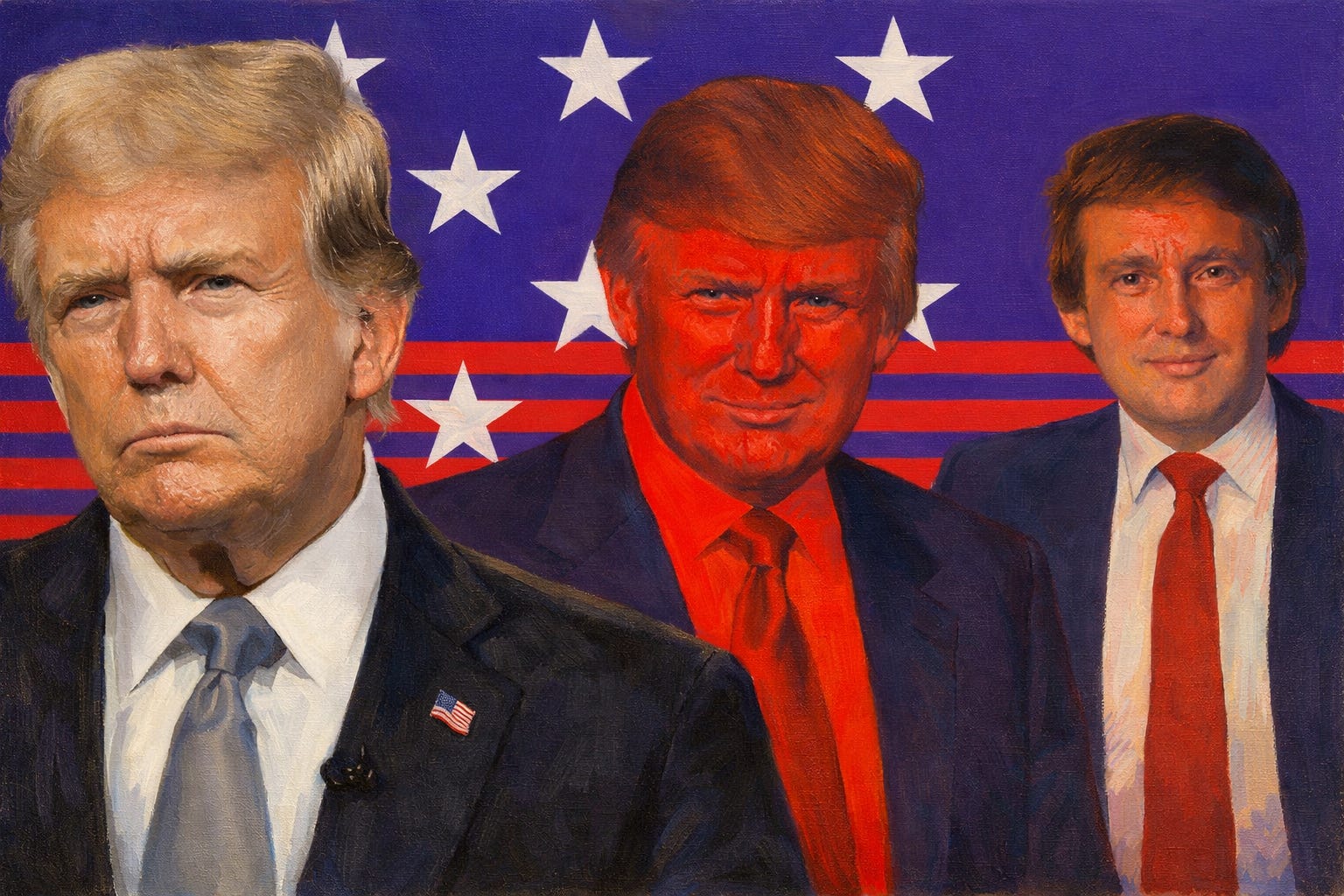
That man now controls the federal government. And the letter reads less like a historical curiosity and more like a policy memo that took thirty-nine years to execute.
Jennifer Miller, a Dartmouth historian who has studied Japan’s role in shaping Trump’s economic worldview, has pointed out how striking the consistency is. What he wrote about Japan in 1987, he is now doing to half the world’s manufacturing economies through executive action. Stephen Miller, the deputy chief of staff, likes to cite Trump interviews from the 1970s making the same complaints. This is not a politician who evolved into protectionism. This is someone who waited decades for the right office.
The legal machinery, though, keeps snapping.
On February 20, the Supreme Court ruled 6-3 that IEEPA does not give the president authority to impose tariffs. Roberts wrote the opinion. Sotomayor, Kagan, Gorsuch, Barrett, Jackson joined. That is not a partisan split. That is a constitutional wall. The government’s own math: $166 billion collected from over 330,000 businesses under tariffs the Court declared unconstitutional. Customs was ordered to start refunds. Customs told the judge its systems could not handle it. The order got suspended days later.
None of this slowed anything down.
Hours after the ruling, Trump announced a global tariff under Section 122 of the Trade Act of 1974. Cold War-era statute. Allows temporary surcharges for 150 days. The clock started February 24. It expires July 24. And by March 11, the Section 301 probes were already launched, timed so that permanent, legally defensible tariffs could slide into place before the temporary ones vanish.
This is the part that deserves attention. Not the tariffs themselves. The speed. IEEPA gets killed; Section 122 appears the same afternoon. Section 122 has a sunset; Section 301 launches weeks before that sunset. The administration is not reacting. It is rotating through statutes like someone who mapped out every possible judicial outcome in advance and pre-loaded the next move.
Meanwhile, the burden-sharing offensive against NATO has gone from aggressive to surreal. At Davos, Trump demanded allies spend five percent of GDP on defense. At The Hague in June 2025, he extracted a formal commitment to that number. The Pentagon’s 2026 defense strategy, released in January, reads less like a military document and more like an itemized complaint: European and Asian allies have been subsidizing their welfare states with American security guarantees for decades. That is almost verbatim from the 1987 letter.
Slovakia’s prime minister called the target absurd. Canada, Belgium, and Spain walked away from it. Estonia, Latvia, and Poland, the countries closest to Russia, are paying well above the old threshold. The pattern is obvious: proximity to actual danger determines willingness to pay.
Go back to the original letter. Trump argued that Japan, unimpeded by the huge costs of defending themselves, built a dominant economy on America’s dime. Replace Japan with the EU and nothing else in the sentence needs to change. Replace the Persian Gulf with NATO’s eastern flank. Replace the weak yen with 2026 trade surplus figures. The argument updates itself without a single structural edit.
This is not a story about ideology shifting over time. It is something rarer. A fixed conviction, carried privately for decades, that finally got its hands on institutional power. The 1987 letter was an expensive opinion piece from a man with zero political authority. The 2026 Section 301 investigations are federal proceedings with subpoena power, binding timelines, and the threat of targeted duties calibrated to individual economies. The distance between the two is not intellectual. It is purely jurisdictional.
Twenty-four states have sued over the Section 122 tariffs. The EU paused ratification of a trade deal negotiated last summer. Japan faces targeted duties by late July. The average effective tariff rate went from 2.5 percent in early 2025 to 27 percent by April, then settled at 13.7 after the Court stepped in. The Tax Foundation calls it the largest tax increase as a share of GDP since 1993.
July 24 is the date. That is when Section 122 expires and when Section 301 findings need to be ready. If the administration hits that mark, it will have built a permanent tariff architecture on statutes the courts have not yet touched, replacing the regime the Supreme Court tore apart. If it misses, there is a gap, however brief, where the global rate drops to pre-2025 levels and every trading partner currently negotiating under pressure suddenly has leverage again.
The 1987 letter promised to make the allies pay. Thirty-nine years later, the billing system is still under construction. But the invoice has never been clearer.
References:
Don't forget Donald (Krasnov) Trump went to Russia in July of 1987, two months before he bought those ads. I am sure there is no connection.