
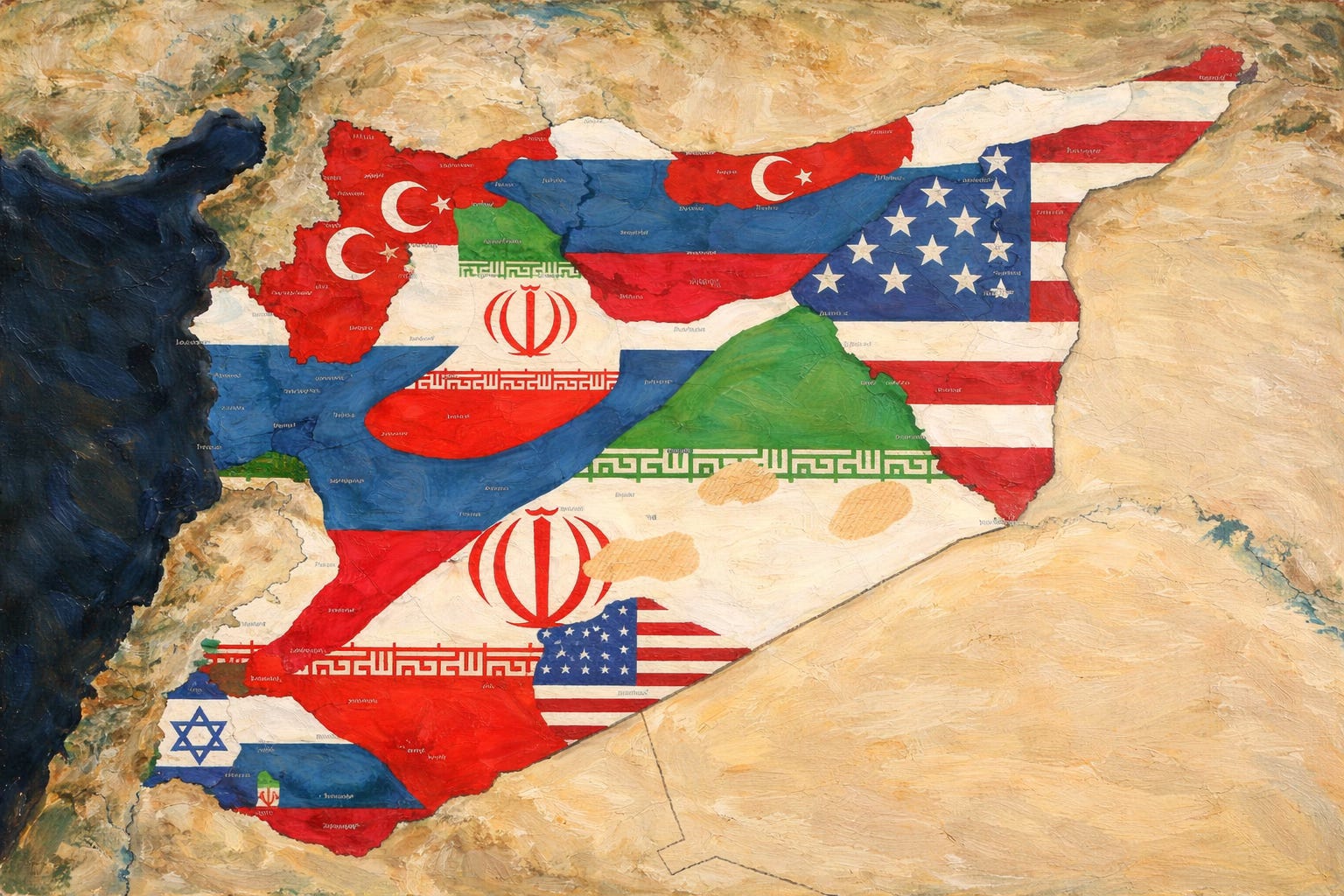
Let’s be honest about what just happened in the Levant.
Turkiye pulled off something that wasn’t supposed to be possible. The foreign policy establishment is still processing it. Most haven’t fully grasped the scale.
Go back to 2018. Ankara was boxed in. The southern border looked like a nightmare drawn by hostile cartographers. To the west, Russia and Iran were backing Assad’s slow reconquest of Syria. To the east, the United States was building a Kurdish statelet with full CENTCOM support. The PKK’s Syrian affiliate had American air cover, American weapons, American legitimacy.
Turkiye was supposed to lose this one. Slowly, maybe. But inevitably.
That’s not what happened.
By 2026, both threats had been neutralized. Assad is gone. The YPG project collapsed. Damascus now operates under a government that Turkiye helped build from the ground up. Not installed by invasion. Not maintained by occupation. Built through years of patient, coordinated effort.
Ankara managed escalation with Moscow without triggering a direct confrontation. Wore down Washington’s commitment to the Kurds through military pressure and diplomatic persistence. Waited for the right moment. Then moved.
December 2024. The offensive that ended Baathist rule took less than two weeks. Aleppo fell. Then Hama. Then Damascus. The Syrian army, hollowed out and abandoned by its patrons, simply disintegrated.
January 2026. The SDF signed a capitulation agreement. Raqqa, Deir ez-Zor, the oil fields, the border crossings. All returned to central government control. The autonomous administration dissolved.
Two existential threats. Both removed. No major war.
What emerged in Damascus is the part that matters most. Turkiye didn’t just clear the board. It built something. The opposition forces Ankara trained and supported for years became the new state. The Constitutional Declaration of March 2025 formalized a centralized government aligned with Turkish interests.
No other regional power has achieved this. Iran built militias. Israel conducted airstrikes. The Gulf states wrote checks. None of them turned a proxy into a functioning sovereign government.
Turkiye did.
Now the lira circulates in northern Syria. Turkish banks operate in Aleppo. The M5 highway is being rebuilt as a trade artery connecting Anatolia to the Gulf. Syria transformed from threat into strategic depth.
This is what successful foreign policy looks like. Not rhetoric. Not posturing. Outcomes.
Ankara redesigned the political order of its neighborhood. Without annexation. Without permanent occupation. Through local partners running their own state.
The Ottoman ghost returned to Damascus. But it came back smarter this time.
References:
Topple, tame, trade: How Turkey is rewriting Syria’s future
The U.S.-YPG Relationship: U.S. Foreign Policy & the Future of the Kurds in Syria and Turkey