
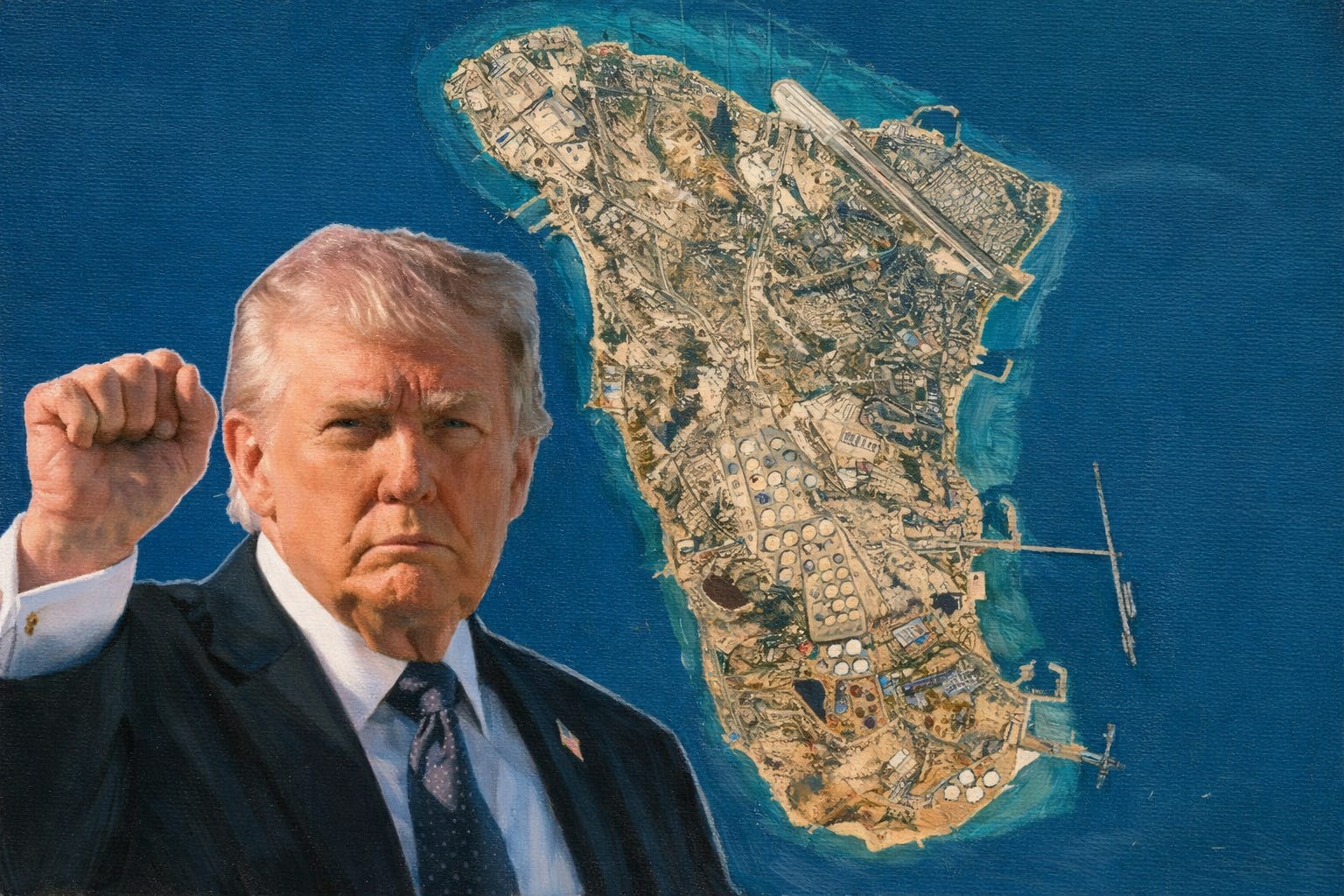
A coral outcrop eight square miles wide sits twenty miles off Iran’s mainland coast in the Persian Gulf, and at 0300 local time on Tuesday, April 7, the sky above it lit up again. Fifty-plus strikes. $117-a-barrel crude ticking upward on screens from Singapore to London before most traders had finished their coffee. The second wave of American bombs to hit Kharg Island in less than a month, and the Pentagon offered almost nothing by way of explanation.
Kharg Island handles roughly 90 percent of Iran’s crude oil exports. Storage tanks, pipelines, offshore loading terminals packed onto a sliver of land one-third the size of Manhattan, all of it guarded by the Islamic Revolutionary Guard Corps, which restricts who sets foot on the island and when. The military bunkers and air defense systems the US hit overnight sit within spitting distance of that infrastructure. CENTCOM says the oil was spared. Again.
Vice President JD Vance went on camera Tuesday morning and said the strikes did not represent a change in strategy. We were going to strike some military targets on Kharg Island, and I believe we have done so, he told reporters, his tone calibrated to suggest that dropping ordnance on a sovereign nation’s most economically critical territory was roughly as noteworthy as a schedule update.
We’re not going to strike energy and infrastructure targets until the Iranians either make a proposal that we can get behind or don’t make a proposal.
That sentence carries weight measured in millions of barrels per day. Analysts at Kpler and the Council on Foreign Relations have estimated that destroying Kharg’s export terminals could remove 1.5 to 2 million barrels of crude from global supply, roughly 3 to 4 percent of seaborne trade. Brent crude already trades above $110. Goldman Sachs and JP Morgan published notes in March warning of $150-plus oil if those terminals burn. The International Energy Agency has called the broader disruption from the Strait of Hormuz closure the largest supply event in the history of the global oil market.
So the terminals stand. For now. The 8 p.m. Eastern deadline President Trump set for Iran to reopen the Strait of Hormuz arrives in hours, and nobody in Washington or Tehran appears certain what happens when that clock runs out.
On March 13, American aircraft hit more than 90 military targets on Kharg Island. Trump posted on social media that the attack had obliterated every military target but that he chose not to wipe out the oil infrastructure. Three and a half weeks later, the US struck again, hitting sites that had already been targeted. Bunkers that were bombed. Air defenses that were bombed again. The same island, the same category of targets, the same careful avoidance of the pipelines and tank farms that would turn a military operation into an economic catastrophe.
This repetition reads less like escalation than rehearsal. Each sortie maps the distance between what the US is willing to destroy and what it is holding in reserve as leverage. The oil stays untouched not because it is off-limits but because it is useful as a threat.
Tehran rejected the latest ceasefire proposal on Sunday, calling instead for a permanent end to hostilities, lifting of sanctions, and a ten-clause framework that Washington dismissed as insufficient. Trump responded with a profanity-laced social media post demanding Iran open the Strait. On Monday, Axios reported a glimmer of progress in back-channel talks centered on a potential 45-day ceasefire and confidence-building measures around Hormuz. Whether that glimmer survives the next twelve hours is the only question that matters in energy markets right now.
Gasoline in the United States averaged $4.14 a gallon on Tuesday morning. Diesel sat at $5.64, inching toward its 2022 record. US crude has doubled in price since January. Asian economies, China above all, face the sharpest exposure; their refineries depend on Gulf crude shipped through the very chokepoint Iran sealed weeks ago after the IRGC broadcast VHF warnings that no vessel would be permitted to pass.
Twenty-one confirmed attacks on merchant ships since March 12. An F-15 shot down over Iranian territory on Day 37 of the conflict, its crew member rescued by US forces. Bridges and railroads struck across Iran by Israel. The conflict that began with surprise airstrikes on February 28, killing Supreme Leader Ali Khamenei and sparking the largest regional war in decades, has settled into a grinding pattern of escalation, deadline, near-miss, and escalation again.
Kharg Island sits at the center of that pattern. Not because of what has been destroyed there, but because of what has not been destroyed yet.
Eight p.m. Eastern, April 7, 2026. After that, the calendar goes dark.
References:
Kharg Island: Iran’s Oil Lifeline and a Tempting U.S. Target