
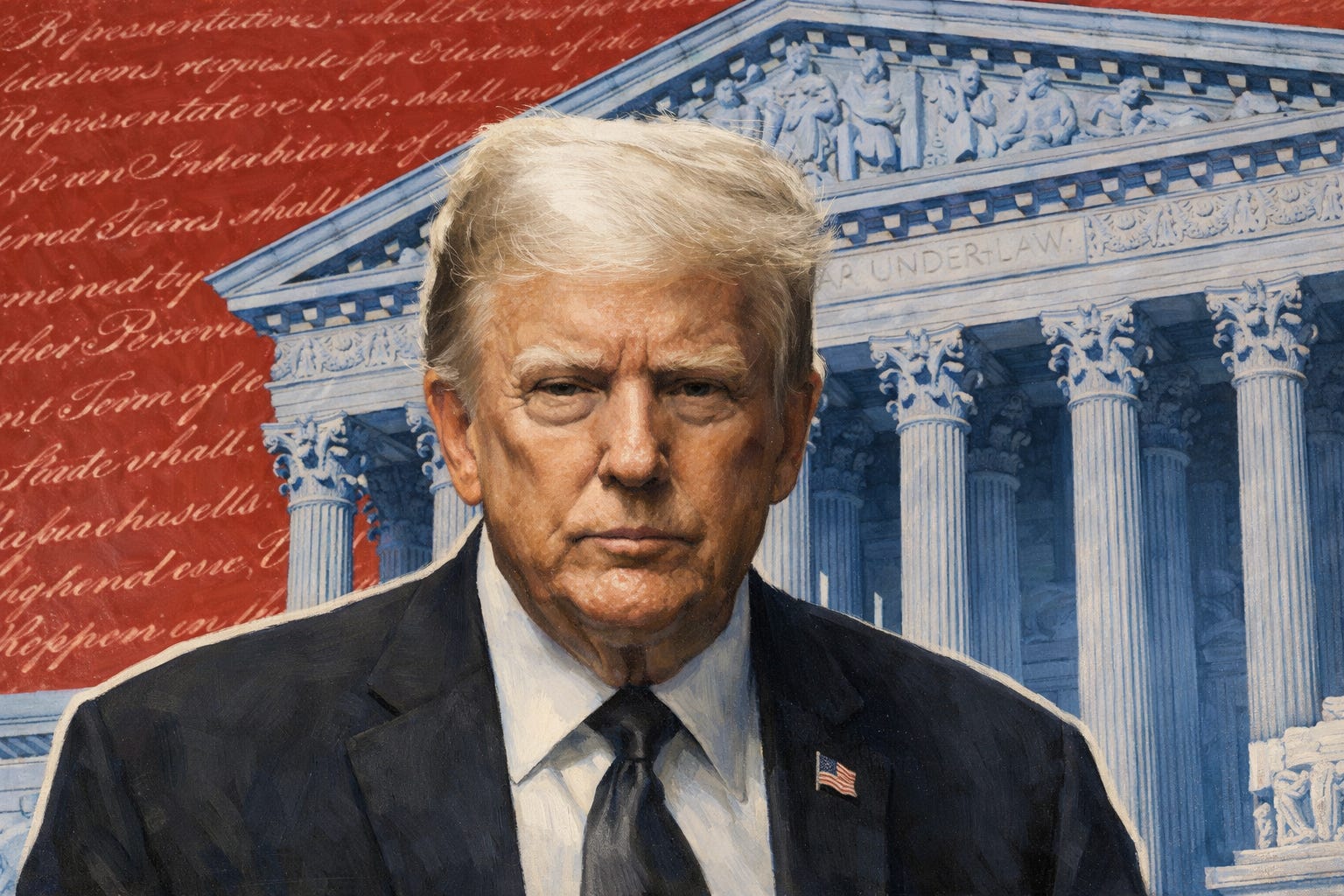
The Supreme Court just gutted Donald Trump’s signature tariff play, and the man responded by threatening to destroy entire countries.
Six justices told the executive branch it cannot simply declare an emergency and start taxing imports like a king with a printing press. The IEEPA was never written for this. Congress kept the power of the purse for a reason. Trump’s Liberation Day experiment died right there in open court.
Hours later, the Rose Garden turned into performance art.
Trump called the ruling a disgrace, then pivoted hard. I can destroy any country! he announced to the cameras. The line went viral before the press conference even ended. Markets twitched. Allies blinked. Importers who had already paid out billions in illegal duties wondered if refunds would arrive before legal fees finished them off.
The numbers refused to cooperate with the bravado. Those tariffs functioned as a straight consumption tax, and almost all of it landed on American households. None of it enriched the Treasury long-term. Most of it vanished into higher prices at Target and Walmart.
Now the Treasury owes the money back. Collected under an invalid statute. Sent back to the Court of International Trade for restitution proceedings that will drag for years. Small importers who ate the duties and passed them along suddenly sit on refund claims worth real cash.
Enter the secondary market.
Sophisticated firms started buying those claims at a steep discount. Desperate companies sell. Hedge funds wait. The arbitrage is cleaner than actually making things.
Chief Justice Roberts wrote the majority with a coalition that spanned the ideological spectrum. Sotomayor, Kagan, Jackson, Gorsuch, Barrett, all signed on. The IEEPA text never mentions tariffs, duties, or taxes. Regulate does not equal tax. The Major Questions Doctrine applied with surgical bluntness: Congress never clearly handed over the power to rewrite the import tax code via emergency declaration.

The Framers put that authority in Article I for a reason.
The dissent from Kavanaugh, Thomas, and Alito shrugged. Just a wrong statutory box checked, they said. The practical mess of refunds would be ugly, they warned, since importers had already passed costs downstream. Consumers paid twice: once at checkout, once potentially through higher future taxes to cover the hole.
The administration had banked on over a trillion dollars in projected revenue to offset tax cuts. That projection is now gone. The bond market smells weakness. Nobody is particularly ready for what comes next fiscally, and Congress was not exactly sitting on a plan.
Republicans who had stayed quiet while the base cheered protectionism briefly found their spines. Don Bacon said the Constitution was defended today and warned any new tariffs under alternative statutes would be voted down in the House. Mitch McConnell noted the damage had been obvious for years. Homes cost more. Farms suffered. The bipartisan alignment felt almost nostalgic.
Trump’s team already signaled the next move. Section 122 of the 1974 Trade Act. A temporary surcharge with a hard expiration unless Congress votes to extend it. The statute was designed for genuine currency crises, not trade-deficit theater.
Invoking it now is a deliberate countdown clock. Force Congress to own the policy or watch it expire and take the blame.
The old steel and aluminum tariffs remain completely untouched. National security loopholes die hard.
Across digital communities something darker has settled in. Why save? Why invest? Why plan, when the rules change by executive order and court mandate? The system keeps revealing itself as theater. Billionaires buy refund claims at a discount while ordinary households absorbed the original tax.
Trust in institutions does not recover from that kind of spectacle.
The de minimis exemption is a perfect microcosm of the whole farce. Packages under $800 once slipped through duty-free. Trump went after China first, then extended the crackdown globally via IEEPA. The Supreme Court struck that authority. So the accelerated closure may now be illegal too. Logistics departments sit in limbo. Small businesses that survived the first wave now face uncertainty squared.
No clean ending here. Just the next pivot, the next legal gymnastics, and the same people paying for it.
May be just a short reprieve. Whats being reported on the right:
https://substack.com/@justindeschamps/note/c-217506581?r=4aiyhh&utm_medium=ios&utm_source=notes-share-action