
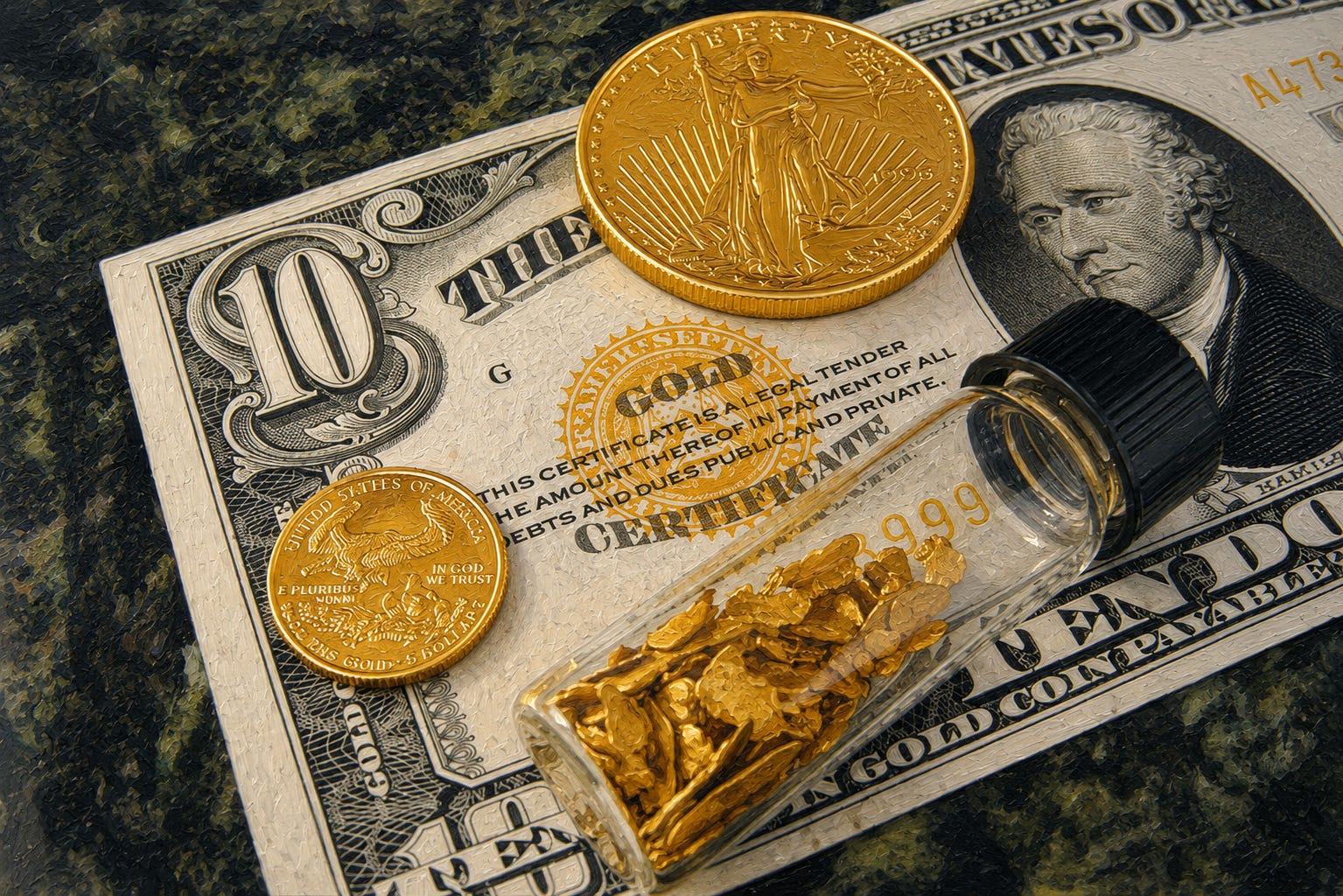
When Richard Nixon went on television in August 1971 to announce that the dollar would no longer be convertible into gold, the men who ran the world’s central banks assumed the metal’s monetary career was over. Bretton Woods had been built on the opposite faith. A generation earlier, several hundred delegates had filed into a hotel in the New Hampshire mountains and lashed the dollar to bullion and every other currency to the dollar, and for a quarter of a century the arrangement mostly held. Vaults filled. Gold sat at the center of the system like a small fixed sun. Then the window closed, the fixed rates fell apart inside two years, and a long procession of economists settled into the comfortable position that gold was a barbarous relic, a sentimental rock that paid nothing to the people who hoarded it.
The rock is back near the center of the system. A report would like that understood as news.
The European Central Bank announced on Tuesday that gold had overtaken US Treasuries to become the single largest reserve asset held by the world’s central banks. The story wrote itself, and the financial press obliged: the metal topples the bond, the bedrock of the dollar order cracks, a new age dawns in the world’s vaults. Geopolitical tensions continue to drive strong central bank demand for gold, wrote ECB president Christine Lagarde in the report, a sentence built to be lifted into a thousand summaries and to explain very nearly nothing.
Consider who is holding the microphone. The institution announcing that the dollar’s signature instrument has slipped to second place is the issuer of the dollar’s only serious rival. That is not a conspiracy. It is just a fact worth keeping in view while reading a press release about the decline of the competition.
Read a few lines past the headline and the awkward figure sits right there in the ECB’s own tables: dollar-denominated assets still account for 42 per cent of global reserves, comfortably the largest share of anything on the board. Gold edged past Treasuries. Treasuries are one dollar instrument among several. The dollar kept its crown; one of its products merely lost a ranking to a commodity in the middle of a blistering rally. That is the real story, and a far less cinematic one. A large part of gold’s climb is not central banks buying more metal so much as the metal already sitting in the vault being repriced upward by a soaring market. Mark your house to value at the top of a boom and you too can overtake the neighbor’s bond portfolio without doing a single thing.
The tell is in the buying itself, which actually slowed last year after three straight years of record purchases. If the gold share is leaping while the gold buying eases, the share is being driven by price, not by appetite. The vaults did not so much fill as appreciate.
Strip the price effect away and the deeper fact is stranger still. The world’s central banks now sit on nearly as much bullion as they hoarded at the height of Bretton Woods, the very arrangement Nixon was supposed to have buried for good. Half a century of treating the metal as an embarrassment, of lecturing finance ministers about the folly of holding a rock that yields nothing, and the vaults quietly refilled to something close to their old monetary peak. No one called a press conference to announce the relic had been readmitted to polite society. It simply accumulated, year by year, while the official line stayed dismissive and the buying went on beneath it.
The report’s preferred word is diversification, which earns its keep precisely because it sounds like it is doing none. Diversification is what a prudent saver does. It is calm, sensible, faintly boring. It is also not quite what happened.
The thing the genteel vocabulary is arranged to avoid naming happened in 2022, when Washington froze Russia’s dollar reserves after the invasion of Ukraine and showed every government on earth that dollar assets belong to you only until the people who issue them decide they do not. Gold in your own basement cannot be switched off by a memo from the US Treasury. That is the engine under the strong central bank demand Lagarde gestures toward, and it is not mysterious, and it does not need the limp passive of geopolitical tensions, a phrase that files a deliberate act of statecraft under the same heading as bad weather.
The buyers are not coy, and the report lists them: China, Poland, Turkiye and India, the predictable roster of governments with motive to hold something Washington cannot reach across a wire. The detail that should have led every write-up, and led almost none, is that the single largest buyer of gold last year was not a country at all. It was Tether, the offshore firm that prints a dollar-pegged stablecoin and evidently prefers to back its digital dollars with the one asset that exists because a meaningful slice of humanity does not trust digital dollars.
Set that beside Lagarde’s tidy sentence about geopolitics and the framing begins to wobble. A crypto company and a handful of sanctioned-or-nervous states are loading up on bullion for reasons that share nothing except a common suspicion of the dollar system, and the ECB has folded all of it into the soft language of demand and diversification, as though a tide had simply come in (tides, conveniently, have no author).
Then there are the back pages, where the actual product is shelved. The same report observes, in the modest tone of an institution that would never dream of boasting, that the international role of the euro has grown gradually but steadily, that euro-denominated debt issuance reached a record high, that foreign money has flowed into euro-area assets at a pace not seen since the currency was launched. A document the world received as a gold story devotes its closing movement to a quiet advertisement for the euro. The metal overtaking Treasuries makes the front of the report; the issuer’s own currency makes the close.
Nobody writes the last act of a document by accident.
None of this means the shift is invented. Central banks really are buying gold, the dollar’s instruments really have lost ground, and the freeze of 2022 really did rattle the world. The point is narrower and a degree colder: the body certifying the trend is also a competitor inside it, the language it chose hides the reason behind it, and the 42 per cent that never moved was left out of the headline because it spoiled the ending.
The trouble with a safe haven is that it stays a haven only until the storm it was built to outlast actually arrives. Turkiye spent four years stacking bullion as insurance against precisely the sort of crisis it said it feared, and then, when its war with Iran began, sold or loaned 130 tonnes in what the ECB itself called one of the largest reserve drawdowns in years, because insurance you cannot spend is not insurance. Expect more of that as the decade’s conflicts multiply, vaults that filled in the name of independence emptying in the name of survival, each reversal relabeled as resilience by whichever central bank happens to be narrating at the time. The relic at the center of the system, it turns out, is mostly on loan.
References: