
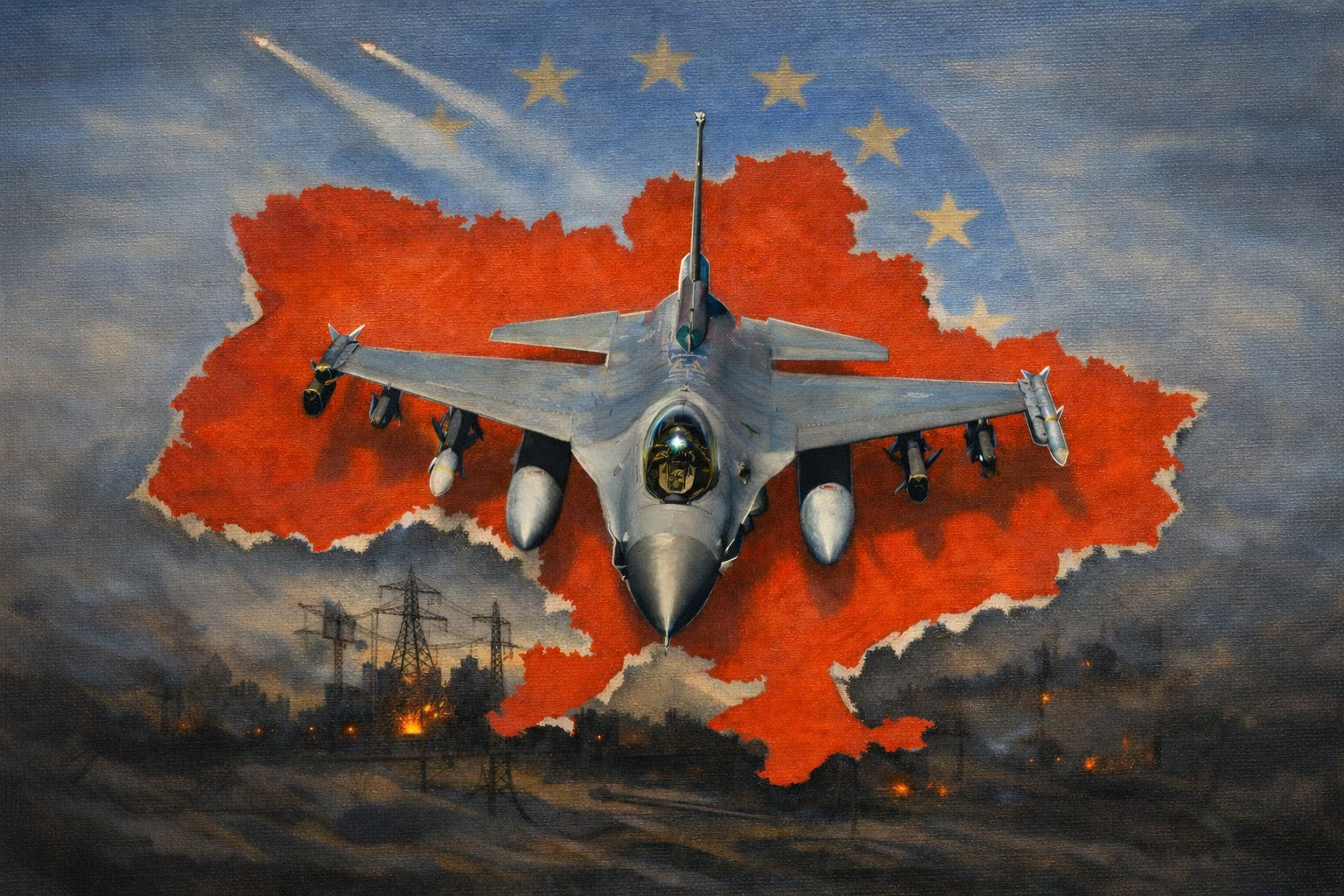
Ukraine is running out of interceptors while Europe argues over paperwork.
That’s the story. That’s the entire catastrophe compressed into twelve words. But the details deserve to be dragged into daylight.
Europe has agreed to loan Ukraine €90 billion. The money exists. The political commitment exists. What doesn’t exist is agreement on where Ukraine can spend it.
France insists the money stays in Europe. Germany and the Netherlands argue Ukraine needs American weapons now. Not in two years when French production lines catch up. And while diplomats posture in Brussels, Russian missiles obliterate Ukrainian power substations because Kyiv doesn’t have enough Patriot interceptors to stop them.
The Dutch government wrote a letter on January 12. The EU’s defence industry is currently either unable to produce equivalent systems or to do so within the required timeframe.
Europe cannot deliver what Ukraine needs to survive.
Germany was equally direct. Germany does not support proposals to limit third country procurement to certain products and is concerned that this would put excessive restrictions on Ukraine to defend itself.
France doesn’t care.
Macron announced that we have taken care to introduce a strict European preference for our defence industry and for the Ukrainian one. The Ukrainian defense industry. As if Ukraine can produce advanced air defense systems while under constant bombardment, with factories relocated underground.
Ukraine operates F-16s donated by the Netherlands and Denmark. Those jets need American spare parts. American software updates. American ammunition.
Without access to U.S. supply chains, the F-16s become expensive sculptures.
France’s proposal would force Ukraine to ground the aircraft it was given as a gift.
This gets worse.
Ukraine has formally requested JASSM cruise missiles. American long-range weapons that integrate natively with F-16s. The European equivalent, Storm Shadow and SCALP missiles, are nearly depleted. France has no inventory left to donate.
But under the French proposal, Ukraine couldn’t use the EU loan to buy JASSMs.
Instead, Kyiv would wait for European production to restart while Russian logistics hubs operate untouched behind the front lines.
The Netherlands proposed a compromise: earmark €15 billion specifically for foreign weapons purchases. Systems Europe cannot deliver within twelve months. Air defense. Deep strike capability. Aviation sustainment.
The things keeping Ukraine alive.
France rejected it.
Germany then introduced its own clause. A reward mechanism for countries that have provided the most bilateral aid. Germany requests for the logic of rewarding strong bilateral support to be applied to member states, too.
Germany has given Ukraine roughly €40 billion in bilateral military aid. France has given significantly less.
Under Germany’s proposal, German defense contractors would receive priority access to contracts funded by the common loan.
The entire negotiation has collapsed into a subsidy war between French and German arms manufacturers.
Ukraine is the hostage.
And then there’s Greenland.
The United States is threatening to annex Greenland by force. The White House confirmed on January 6 that utilizing the US military is always an option to acquire the island from Denmark.
Denmark is a NATO ally. An EU member state.
The Danish Prime Minister warned that a forced U.S. takeover would signal the end of NATO.
This is the geopolitical paradox Europe refuses to confront. The same week the U.S. threatened a European ally, Germany advocated funneling billions of euros into the American defense industrial base.
France exploited the contradiction perfectly: Why fund the military that might invade a member state?
The answer is that Ukraine cannot wait for Europe to resolve its existential contradictions.
The European Commission will release its formal proposal on January 14. The text will likely include a non-availability waiver. A compromise. Procurement defaults to European suppliers unless they cannot certify delivery within twelve months.
France gets its principle. Germany gets its pragmatism.
But compromise is just another word for delay.
And delay, in this war, is measured in substations destroyed and cities left dark.
Ukrainian soldiers are rationing air defense interceptors. They have to choose which incoming missiles to shoot down and which to let through.
While Europe argues over contracts, people freeze in the dark.
References:
Germany and France clash over buying US arms with €90B loan to Ukraine