
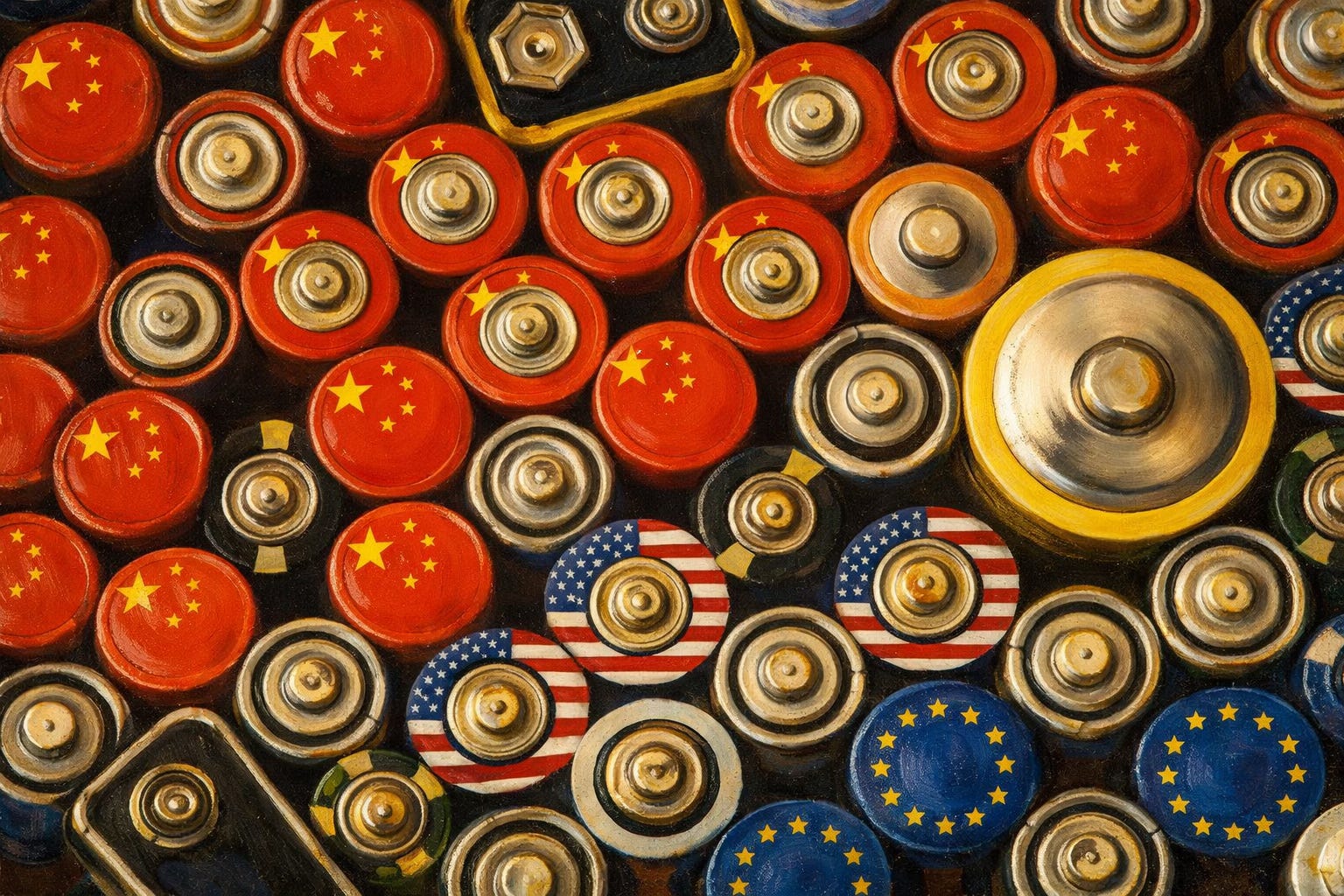
They’re building something in Sichuan that most Americans will never hear about until it’s too late.
A battery. That’s all. Just a battery.
Except this one charges a truck in five minutes. Lasts thousands of cycles without dying. Doesn’t need the lithium strip-mined from Bolivia. Doesn’t need the cobalt that Congolese children pull from collapsing tunnels.
China built it. China’s scaling it.
And while Washington debates infrastructure bills that go nowhere, Huawei just opened a charging station in Beichuan that pumps enough power to light up a small city into trucks that gain 100 kilometers of range in five minutes.
The time it takes to refuel.
The time it takes for America’s entire automotive strategy to become obsolete.
This isn’t about cars. It’s about who controls the energy that moves everything across continents. Food. Medicine. People.
And right now, the West is asleep.
The technology relies on graphene. Single-atom-thick sheets of carbon integrated into aluminum-ion architectures. Electron mobility up to 100 times faster than silicon.
The batteries stay cool under massive loads. They don’t overheat. They don’t explode like the lithium-ion packs that turn parking garages into infernos.
They’ve been shot. Heated. Crushed. They don’t care.
The companies building them aren’t startups begging for venture capital. SuperC Technology. Tunghsu Optoelectronic. Ufine Battery. These are integrated manufacturers with supply chains that run from raw graphite to finished battery packs, all inside China’s borders.
Meanwhile, America has a startup in Nevada making power banks.
It’s not that Western scientists don’t understand the physics. MIT researchers publish brilliant papers. European labs produce stunning work.
But understanding isn’t building. And building isn’t deploying.
China controls over 95 percent of the world’s battery-grade graphite supply. They hold more than 50,000 graphene-related patents. Any Western company trying to commercialize this technology will drown in licensing fees and litigation before they sell a single unit.
They didn’t just invent a battery. They invented the infrastructure to support it.
That Beichuan station isn’t just a charger. It’s a smart microgrid with solar panels and energy storage that buffers the grid from power spikes. It feeds electricity back during peak demand.
Truck operators save twenty-one grand annually per vehicle compared to diesel. The trucks pay for themselves in three years.
The economics don’t just favor electrification. They demand it. When China’s logistics fleet goes fully electric, running on batteries that charge faster than diesel trucks can refuel, their supply chains will operate at speeds and costs that Western economies physically cannot match.
This is what losing looks like before anyone realizes the race is over.
The West spent years panicking about lithium supplies. Cobalt mines. Rare earth exports.
And while that happened, China was locking down carbon. The most abundant element on Earth, refined into the most advanced material humans have ever created, controlled by a single nation.
Europe launched the Graphene Flagship in 2013 with a billion euros. Twelve years later, they’re celebrating pilot production lines.
China’s building factories that produce tons of graphene slurries daily.
And the cruelest part? This battery eliminates the one advantage Americans thought they had. Range.
The West built 400-mile EVs because charging took forever. But if charging takes five minutes, nobody needs 400 miles. They need 200 miles and a charger every 150.
Lighter cars. Cheaper cars. More efficient cars.
China’s not competing on Western terms anymore. They changed the game while everyone else was optimizing the old one.
So what happens when Chinese EVs flood global markets? Lighter, faster-charging, safer.
What happens when American automakers are stuck selling expensive, heavy, slow-charging vehicles that nobody wants?
What happens when the battery supply chain nobody controls becomes the oil supply chain nobody escaped?
References:
Charging Ahead: China’s Graphene Battery Breakthrough Is a Wake-Up Call for the West
Revolutionary Graphene Aluminum-Ion Battery Technology Breakthrough 2025
Excellent reporting.Thanks. Of course, you could write a column on China’s technological advances in batteries every day and never run out of material.
This is a topic about which people who prioritize environmental issues and people who prioritize maintaining America’s status as a super power should be in total agreement.