
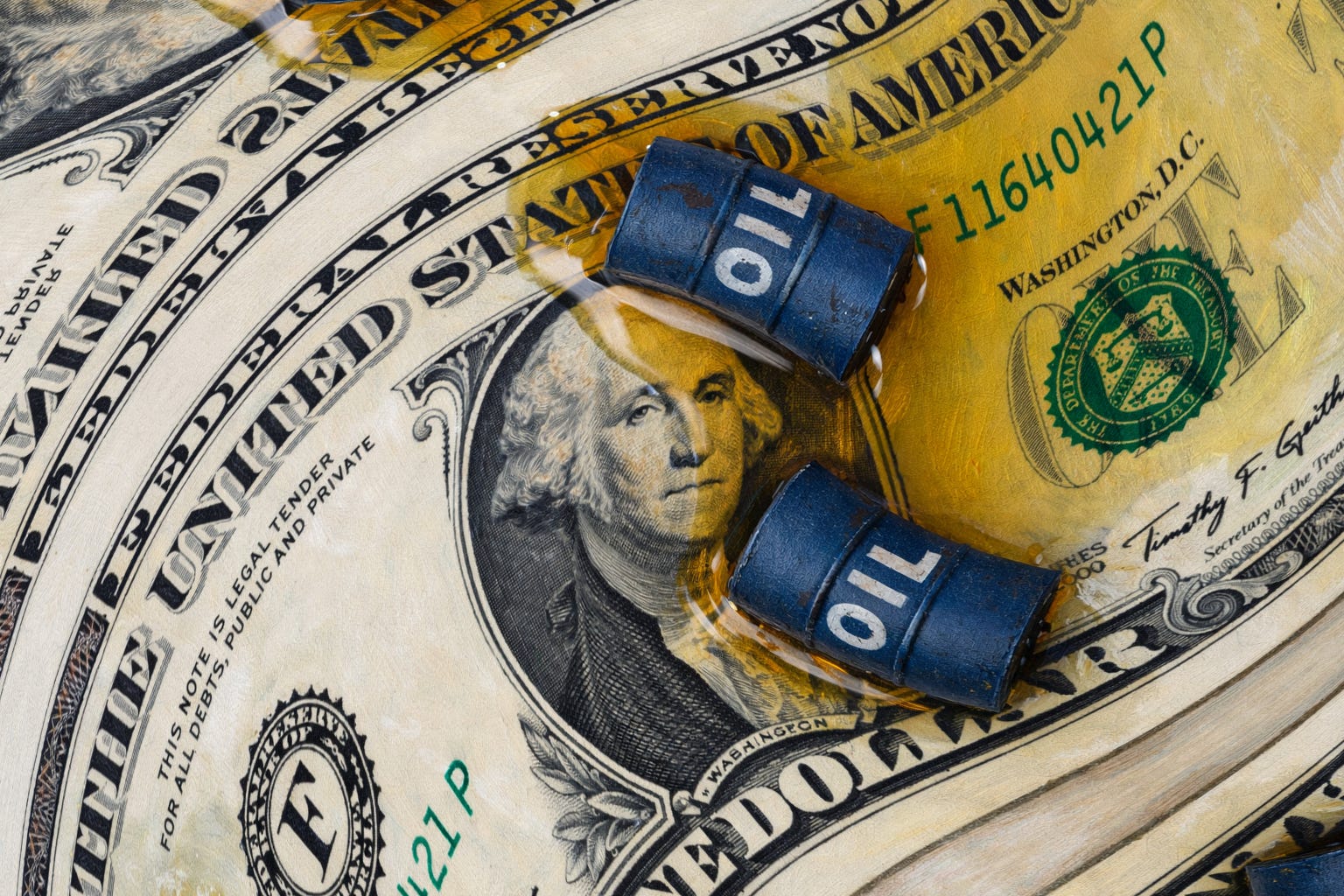
Scott Bessent thinks oil prices will fall to probably much lower than $80 a barrel in a couple of months. Bessent is also, according to Bloomberg, so alarmed about oil prices that his Treasury officials have spent weeks warning the White House about the damage.
Welcome to Operation Epic Fury economics, where the spreadsheets say one thing and the podium says another.
Bloomberg reported on March 25 that senior administration officials have been quietly modeling what $200 oil would do to the economy. Not a prediction, the unnamed sources clarified. Just a contingency exercise. The kind of thing governments do during times of strain.
White House spokesman Kush Desai called the account false, then in the same breath acknowledged the administration is always evaluating various pricing scenarios and economic impacts. The denial contained its own confession.
WTI closed the week near $100. Brent crossed $112. The Strait of Hormuz, which carries a fifth of global oil exports, has been functionally closed since March 2. Over 150 ships anchored outside the chokepoint, going nowhere. Iran set up what amounts to a toll booth, letting Chinese and Russian tankers through for fees paid in yuan. Everyone else waits.
The IEA called it the worst supply shock since the 1970s. Rapidan Energy Group said it exceeds every previous disruption by a factor of two. This is not a drill.
The administration’s answer has been to drain the Strategic Petroleum Reserve. They authorized releasing 172 million barrels, about 40 percent of what was left, from a reserve already at its lowest level in three decades. Energy Secretary Chris Wright promised to replenish it all within a year at no cost to taxpayers, which requires oil to fall sharply from current prices and stay there long enough to buy cheap. That is a bet, not a plan.
Wright told CNN on March 12 that $200 oil is unlikely. Asked if Americans should brace for Iran’s threat of exactly that price, he said: I pay no attention to what Iran says.
Thirteen days later, his colleagues at Treasury were reportedly paying very close attention.
OPEC bumped output by 640,000 barrels per day in February. Helpful, except that Saudi, UAE, and Iraqi crude has nowhere to go because the shipping route is closed. OPEC agreed to add another 206,000 barrels in April. That oil also needs to get through the strait.
Gas jumped a dollar a gallon in thirty days. National average hit $3.98. California is at $5.81. Oxford Economics estimated that if prices hold, the average household pays an extra $740 in fuel costs this year, roughly wiping out the bigger tax refunds the administration had been touting. Trump spent months taking credit for falling gas prices. That talking point is gone.
Consumer sentiment dropped to a three-month low. Republican disapproval of Trump on inflation jumped from 28 to 40 percent between mid-February and late March. House Republicans found themselves explaining why everything costs more right as they were trying to sell a tax bill.
The Fed held rates steady on March 19 and bumped its inflation forecast. Powell said energy costs will push up overall inflation but that it is too soon to know the scope and duration. The ECB held too, but Lagarde warned on March 25 that rate hikes are on the table even if an expected jump in euro zone inflation proves temporary.
Central bankers do not talk like that when they think disruptions are about to end.
Trump told Bessent the market reaction was not as severe as I expected. He said prices would drop very rapidly when this is over. He also threatened Iran with retaliation twenty times harder, announced a ten-day pause on energy strikes, and claimed talks are ongoing and going very well. Iran had publicly rejected negotiations two days earlier.
Shale producers, meanwhile, are sitting on a $63 billion windfall and have told analysts they have no plans to ramp up production. Chevron’s Q1 earnings estimates jumped 40 percent. The oil industry is getting rich. It is just not getting productive.
Twelve developing nations from Egypt to Kenya to El Salvador are watching their bond spreads blow out. The IEA called the combined energy and food security threat the gravest in its history. None of this appeared in Desai’s statement about resilient economic fundamentals and everyday investors set to reap a windfall.
The administration planned for this war to last four to six weeks. It is entering week five. Iran is still refusing talks. The strait is still closed. Oil is still climbing. The SPR is draining. And Treasury is quietly modeling the scenario where crude doubles from here.
The White House says nobody is worried. The models say someone should be.