
A Greek Patriot battery in Saudi Arabia shot down two Iranian ballistic missiles on March 19. First combat engagement in the four-year history of the ELDYSA mission. A handful of Greek Air Force personnel, stationed at Yanbu to guard Aramco’s Red Sea oil infrastructure, finally had to fire.
Three days later, Mitsotakis stood at the European Council and essentially said: so, about that mutual defense clause.
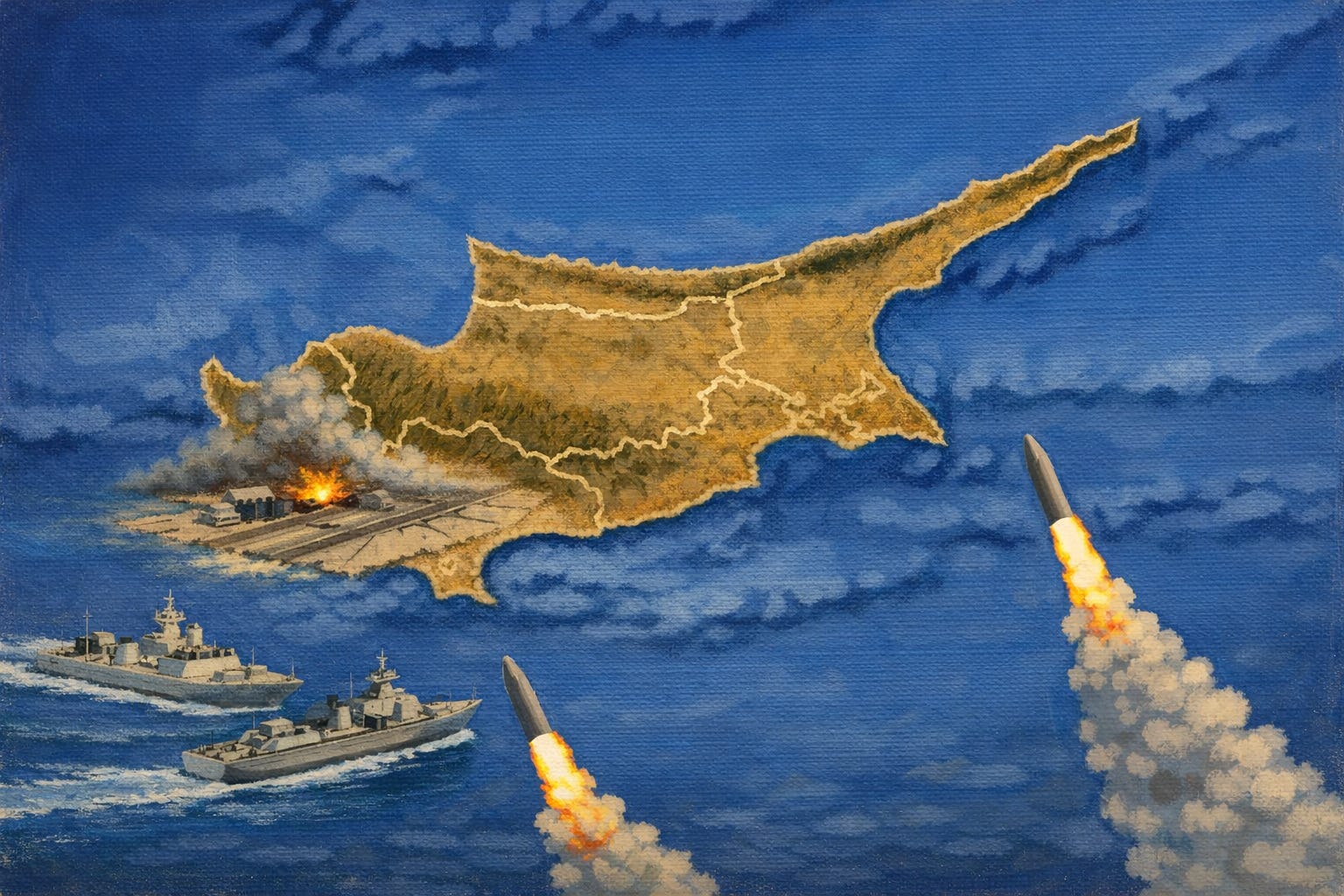
When a drone hit RAF Akrotiri on March 2, cracking the runway of a British sovereign base in Cyprus, Greece didn’t wait for a committee. Athens sent two frigates and four F-16s within 24 hours. France sent a frigate and anti-drone kit. Italy, the Netherlands, Spain followed by March 5. Christodoulides, the Cypriot president, called it a de facto, if not de jure activation of Article 42(7), the EU’s mutual assistance clause. The European Commission’s response was, predictably, that no formal activation had taken place.
Ships were in the water. Jets were in the air. Brussels was in a meeting.
Article 42(7) says member states must help when one of them gets attacked. It’s been triggered exactly once, after the Paris attacks in 2015, and even then the response was a patchwork of bilateral deals. No standing framework. No force packages. No command chain. For most EU members, the clause is a nice paragraph in a treaty. For Cyprus, which sits outside NATO and can’t invoke Article 5, it is the entire security architecture or it is nothing.
Nicosia has now forced the clause onto the agenda of the informal EU summit on April 23-24. The summit will be held in Cyprus.
Christodoulides has been briefing European leaders on what life near the British bases actually looks like since early March. Air raid sirens. Warning messages on phones. A war being fought from Cypriot soil without Cypriot consent. The political fallout is already moving faster than diplomacy. Parliamentary elections hit on May 24, and polling shows half the country thinks no existing party represents them. Anti-system movements are surging: the far-right ELAM, Fidias Panayiotou’s Direct Democracy party, the reformist ALMA founded by former Auditor General Odysseas Michaelides. The Akrotiri strike gave all of them the same line: the British bases make Cyprus a target.
Christodoulides is trying to own this before it buries him. He told reporters all options are on the table regarding the bases and confirmed he’s had a preliminary chat with Keir Starmer. London’s response, via parliamentary undersecretary Al Carns, was that the bases’ future is not in question. Starmer has pledged the Sovereign Base Areas won’t be used by American forces for strikes on Iran. Cold comfort for the 10,000 Cypriots who live inside those base perimeters and heard the sirens regardless.
Greece is playing a different game entirely. The Yanbu interceptions gave Mitsotakis something tangible to throw at Turkey’s recurring complaints about Greek military buildup in the Aegean. Ankara accused Athens again in early March of violating the demilitarized status of several islands under the 1923 Lausanne Treaty and the 1947 Paris Peace Treaty, the same argument Turkey has recycled for decades, now sharpened by Greece’s deployment of a Patriot battery to Karpathos after the Akrotiri strike. Mitsotakis called the Saudi interceptions strictly defensive actions. The framing is deliberate: Greek air defenses just protected global oil supply chains from Iranian ballistic missiles. Try calling that provocative militarization with a straight face in a European capital.
But most EU member states aren’t losing sleep over Article 42(7). For the majority, the Middle East is an energy price problem and, maybe, a terrorism pipeline. Poland’s President Nawrocki vetoed legislation in mid-March that would have unlocked EU defense loans. The European Parliament voted overwhelmingly to strengthen the mutual defense clause. Parliamentary votes don’t move warships.
Greece and Cyprus are betting they can build operational precedent faster than the full bloc can build institutional consensus. The ships that sailed to Cyprus weren’t dispatched under any EU mechanism. They were national decisions, coordinated bilaterally, executed before anyone in Brussels picked up a pen. If the April summit turns that into doctrine, the clause means something. If it produces another round of statements about European strategic autonomy, Athens and Nicosia will have confirmed what they probably already suspect: the most persuasive argument for collective defense is showing up before anyone asks.
Sources:
Greek Patriot Battery Intercepts Two Iranian Ballistic Missiles
Why Cyprus is pushing the EU to define its mutual defence clause
https://lcsilenceiscomplicity1.substack.com/p/virginias-law?r=5ltu98&utm_medium=ios