
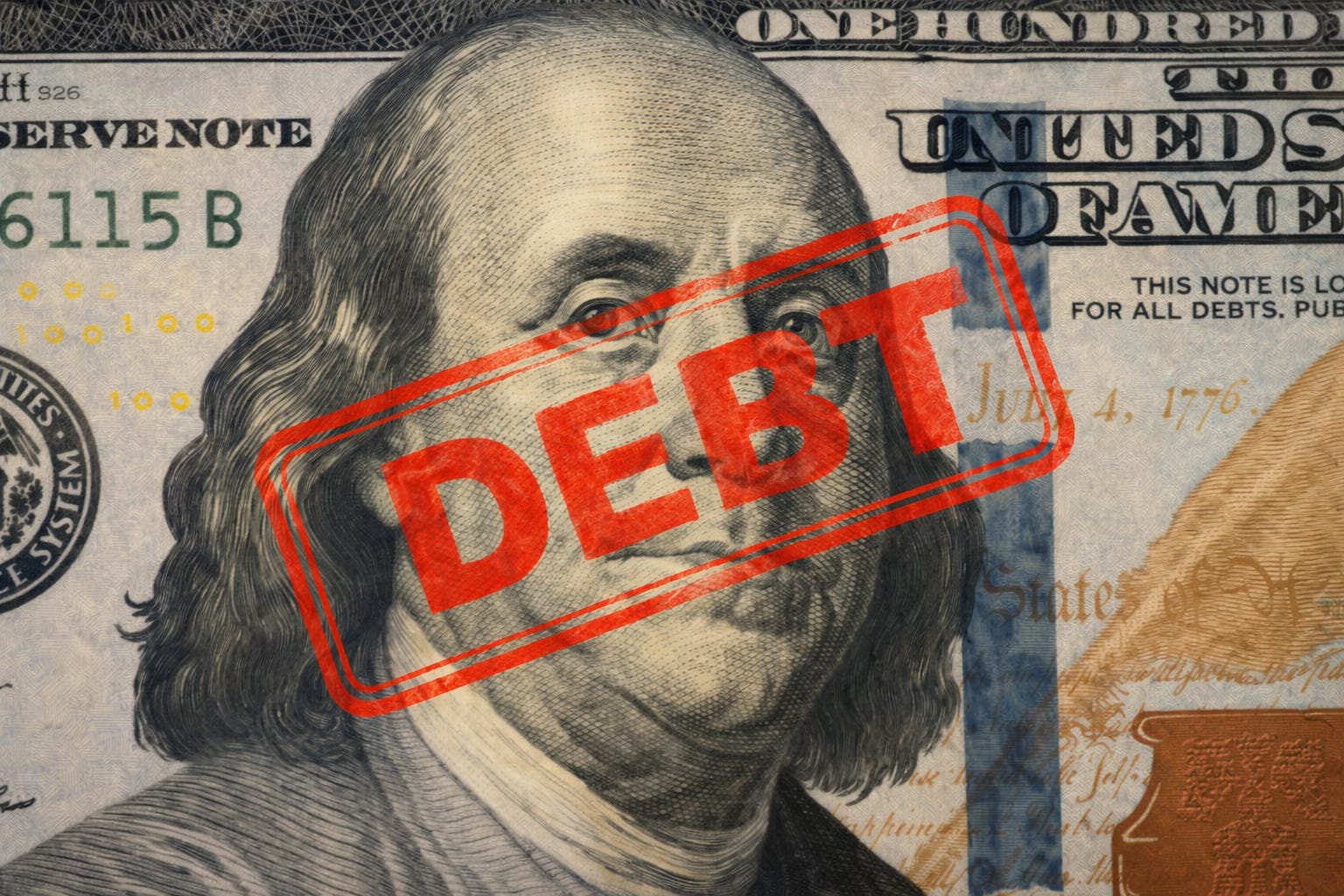
The United States government owes $37.6 trillion, and the people running it have decided the way out is to stiff their creditors.
Not outright default. That would be too honest. Instead, the plan involves something called the Mar-a-Lago Accord, a suite of proposals from Stephen Miran, chair of Trump’s Council of Economic Advisers, that would fundamentally rewrite the rules of global finance to solve America’s math problem.
Charge foreign governments a user fee for holding US Treasury bonds. Withhold a portion of their interest payments. Push them out of short-term bills into hundred-year bonds at rates that would make a loan shark blush. Refuse the deal? Face 20% tariffs or lose your security guarantees.
Treasury executed $14.5 billion in debt buybacks in the first week of December alone. That’s yield curve control without anyone admitting it. Interest payments now exceed the entire defense budget.
The intellectual framework comes straight from Miran’s worldview: the global economy is fracturing into blocs, and America’s allies should subsidize its debt as the price of security. It’s the Nixon Shock meets medieval tribute systems. Foreign central banks holding trillions in Treasuries would be reclassified from creditors to users of a service, a linguistic trick that transforms binding obligations into discretionary fees.
Legal scholars and investment banks have a different term for this: selective default.
The 1933 precedent looms here. Roosevelt voided gold clauses in bond contracts and devalued the dollar by 40%. That, too, was framed as necessary restructuring, but in practice it was a unilateral breach prioritizing domestic politics over creditor rights.
Miran’s proposals echo that logic with one difference: the 1933 move happened during a deflationary collapse when creditors had nowhere else to go. Today’s maneuver would occur while China, Russia, and much of the developing world are building alternative payment systems.
The alternative to financial repression is what bond traders game out privately: the Fiscal Calamity. A failed Treasury auction. Yields spiking past 6%. Congress forced into emergency cuts to Social Security and Medicare to stabilize markets.
It’s the UK’s Truss moment scaled to American proportions.
Former White House advisers have started saying this out loud: political paralysis makes market-forced austerity the most likely outcome, because neither party will voluntarily cut entitlements or raise taxes.
The corporate credit market is already pricing in disaster. Default probability for speculative-grade borrowers hit 9.2% in December, levels not seen since 2008. But the real-economy damage appears muted. Modern bankruptcy restructuring means debt-for-equity swaps that wipe out shareholders but keep workers employed.
Soft landing for operations. Hard landing for capital.
Meanwhile, the primary deficit sits above 3% of GDP. That’s the structural hole ensuring debt grows automatically. The debt stock increases 5-6% annually while GDP growth is stuck around 1.8%.
The denominator cannot catch the numerator.
So the government picked Door Number Three: inflate the debt away while using regulatory capture to force domestic institutions to keep buying. Banking rules now incentivize more Treasury holdings. Pension funds get pressured with appeals to patriotism. The Fed’s independence erodes gradually, then suddenly.
Real yields stay barely positive while inflation settles at 4-5% for a decade. Bondholders lose purchasing power in slow motion.
The difference between 1945 and 2025 is that Bretton Woods was built on genuine American surplus and uncontested dominance. The current plan assumes those conditions still hold when they manifestly do not. China holds over a trillion in Treasuries. Japan another trillion.
These aren’t passive holders grateful for security guarantees. They’re strategic actors watching Washington openly discuss robbing them.
De-dollarization was a fringe theory two years ago. Now it’s visible in trade flows, reserve shifts, rising settlement in local currencies, and gold accumulation.
Three scenarios emerge.
The hard calamity: market confidence collapses before repression mechanisms activate, triggering the austerity nightmare.
The soft repression: Miran’s proposals get watered down, the Fed caps yields informally, inflation runs hot but manageable, bondholders lose wealth over a decade but the system avoids nominal default.
The growth miracle: AI productivity gains generate 4-5% real GDP growth that closes the fiscal gap.
That last one contradicts every visible demographic trend, but hope springs eternal.
The Treasury market has stopped being a risk-free benchmark and become a political instrument. The bill for pandemic spending, tax cuts, and entitlement expansion came due. The question was never if someone would pay, but who.
The government decided: foreign creditors first, domestic savers second, and only then, maybe, a hard look at spending.
Whether the rest of the world accepts this without triggering the very calamity Washington hopes to avoid is the only suspense left.
References:
Federal Debt and the Debt Limit in 2025
US firms’ default risk hits 9.2%, a post-financial crisis high
Navigating Washington’s risks: Mar-a-Lago accord, tariffs and municipal tax exemption
"Washington is trying." This is a proposal? Has any part of it been implemented? Where does it stand in the spectrum between "Trump riffing on X" and a real policy with cash changing hands? Sounds kinda blue-sky, but weirder things have happened, especially in this weirded-out administration.
A confluence of events is occurring. Japanese yields are reaching levels last seen in 2007. America has a funding problem with expansive debt to fill the gap instead of taxes.
If Trump decides Russia owns Ukrainian land, former allies are threatening to sell enough bonds to get the regime’s attention.
They can try turning interest payment into users. lol. The run on bonds will be long and steep.