
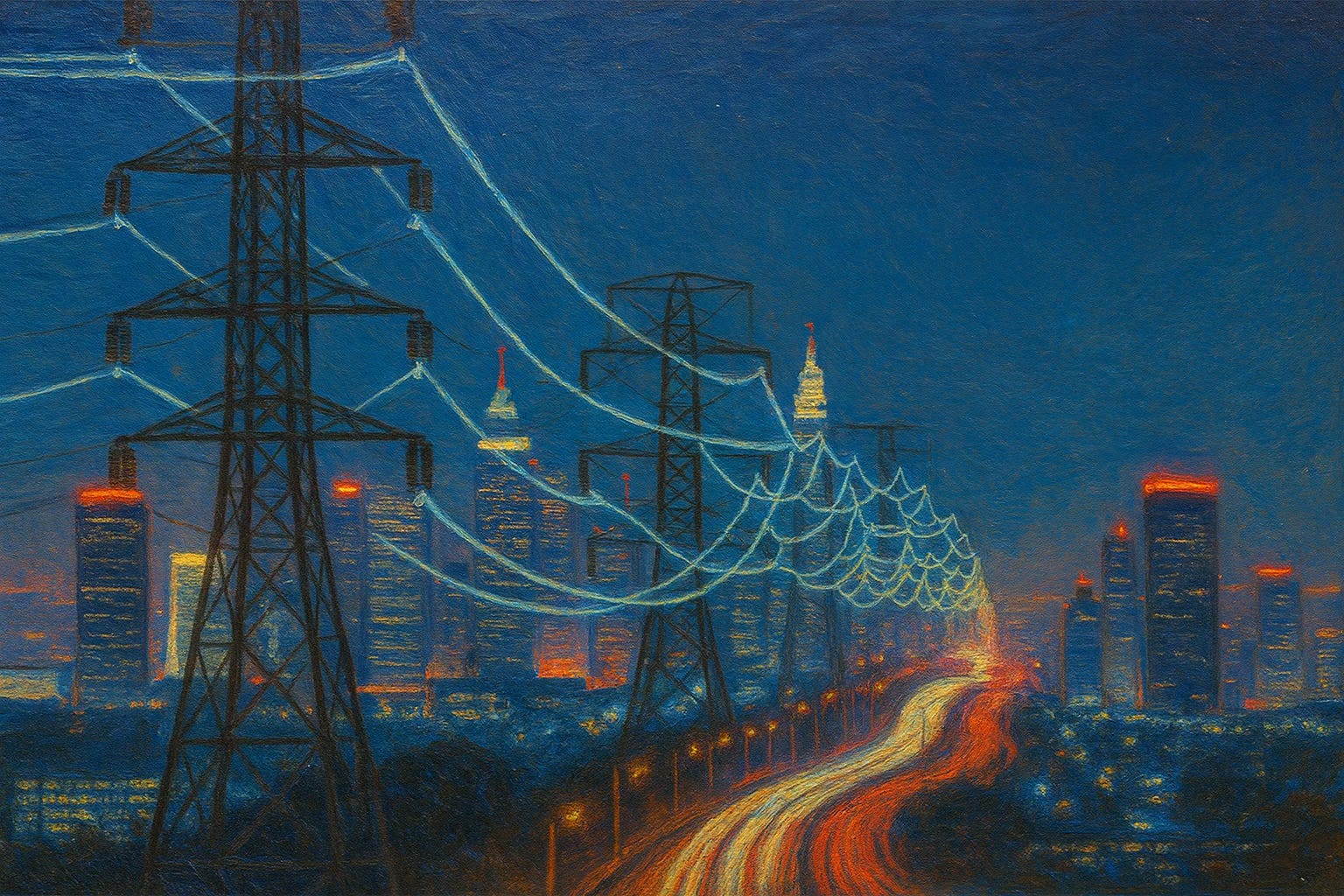
Columbus, Ohio. Twenty-seven dollars. That’s what showed up on electricity bills last summer. Not because anyone used more power. Because Microsoft wanted a data center.
This is happening everywhere now. Philadelphia. Northern Virginia. D.C. Wherever the tech giants plant their server farms, rates spike. The utilities dress it up as infrastructure investment. Call it what it is: a shakedown.
Here’s the game. Amazon or Google announces a massive data center. Local politicians throw a parade. Jobs! Progress! The future! What arrives instead is a construction crew for eighteen months and then… thirty people. Maybe fifty if the facility is huge.
Thirty people running a complex that devours as much electricity as a small city.
Ohio gave Microsoft a fifteen-year tax break worth seventy-two million dollars. Jobs created? Twenty. Not two thousand. Twenty. The state will lose nearly two billion in revenue from data center exemptions. Two billion dollars for facilities that employ almost no one.
But the subsidy runs deeper than tax breaks.
When utilities build the transmission lines and substations these places demand, they operate on guaranteed returns. The costs get spread across everyone’s bill. Every household. Every school. Every hospital. Everyone subsidizes the infrastructure for Silicon Valley’s AI fantasy.
The PJM grid operator just saw auction prices jump from two billion to nearly fifteen billion. Seven times higher. Tech companies need the capacity. Ratepayers cover the tab.
The companies are spending over two hundred billion dollars a year on this infrastructure. Microsoft alone is pacing toward ninety billion in capital expenditure. For what? AI services that don’t generate enough revenue to cover the depreciation.
An Nvidia chip, the heart of these operations, becomes obsolete in three years. The buildings are financed over twenty. The timeline doesn’t work. The assets rot before they pay off.
Goldman Sachs calls it the six-hundred-billion-dollar question. How do you justify infrastructure that can’t possibly generate returns? The answer keeps not arriving.
But Columbus families keep paying their extra twenty-seven bucks.
The energy numbers are obscene. US data centers burned through electricity equivalent to Malaysia’s entire consumption last year. By 2030, double that. A single ChatGPT query uses ten times the power of a Google search. The digital economy was supposed to be weightless. It’s becoming the heaviest thing we’ve ever built.
And the power comes from somewhere.
All those corporate pledges about renewables and net-zero? Evaporating. Coal plant shutdowns are slowing. Natural gas orders are surging. Some facilities are installing their own gas turbines on-site to avoid grid congestion entirely. When the servers need power now, climate commitments become inconvenient.
Microsoft’s deal to restart Three Mile Island won’t deliver electricity until the 2030s. Small modular reactors are a decade away. The AI boom runs on fossil fuels. The carbon goes into the atmosphere. The costs go onto residential bills.
Meanwhile China is doing something completely different.
While American tech builds better chatbots, Chinese factories are going dark. Fully automated. Twenty-four hour production with no human workers on the floor. Xiaomi’s Beijing facility cranks out a smartphone every second. The workforce dropped from thousands to a few hundred engineers babysitting the AI systems.
This is what physical automation looks like. Supply chains optimized by algorithms. Production lines that never sleep. The output is a flood of electric vehicles, batteries, solar cells at prices Western manufacturers can’t touch even with tariffs.
America automates spreadsheets. China automates factories.
One produces better email suggestions. The other produces dominance over the actual physical economy. Over the stuff people need and buy and use.
The families in Columbus aren’t funding breakthrough drug discovery or revolutionary materials. They’re subsidizing autocomplete. The economic value remains a PowerPoint slide. The bills are real.
Industry lobbyists talk about employment multipliers and economic development. The Lincoln Institute uses a different word: extractive. These facilities consume land, water, power. They return almost nothing in jobs or taxes once construction ends.
One trillion dollars being deployed. The depreciation clock ticking. The grid straining. Rates climbing.
And nobody can answer the basic question.
Who benefits?
Not the families paying more for electricity. Not the states hemorrhaging tax revenue. Not the climate. Not the workers who don’t get hired because these facilities barely employ anyone.
The hyperscalers are making a massive bet that AI will eventually justify this spending. Eventually unlock enough value to cover the costs. Eventually generate returns that make sense.
Eventually.
The ratepayers are covering the bet right now. With real money. Every month.
The companies call it innovation. The economists call it a bubble. The families in Ohio call it twenty-seven dollars they didn’t have last year.
The infrastructure is being built. The costs are being socialized. The profits, if they ever materialize, will be privatized. This pattern isn’t new. But the scale is unprecedented. And the bills keep arriving.
References:
AI boom could mean new future for coal power
This article comes at such a crucial time. You hit the nail on the head with 'Call it what it is: a shakedown.' It’s exactly that, a transfer of costs to ordinary people, not genuine investment. Realy frustrating to see our bills jump for projects that barely create jobs but drain so much power.